Corymbose carline thistle
Carlina corymbosa
Description
The Corymbose carline thistle (Carlina corymbosa) is a perennial herbaceous plant belonging to the Asteraceae family. Known for its rugged appearance and resilience, this crop is increasingly recognized for its utility in drought-prone agricultural environments and specialized botanical gardens.
Native to the Mediterranean basin, the species is widely distributed across Southern Europe and parts of Western Asia. It thrives in stony, arid landscapes and has evolved to survive in nutrient-poor soils where moisture availability is limited throughout the growing season.
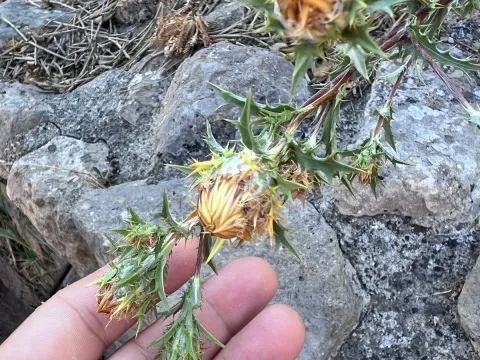
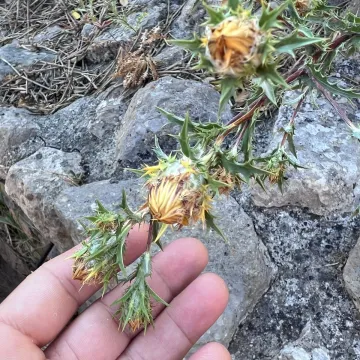
Botanically, the plant is characterized by its distinct corymbiform flower heads surrounded by spiny involucral bracts. The root system is deep and taproot-like, allowing the plant to extract moisture from deep soil layers. The stems are typically erect, often woolly or pubescent, providing effective protection against high solar radiation.
In terms of agricultural management, the plant requires excellent drainage to prevent root rot. It favors alkaline, chalky soils and requires minimal to no fertilization. Proper spacing is crucial to ensure adequate airflow, which prevents the development of fungal pathogens common in more humid conditions.
The primary economic value of Carlina corymbosa lies in its traditional medicinal applications and its role in the floral industry as a durable dried flower. Its ability to grow in marginal soils makes it a candidate for sustainable land restoration projects and xeriscaping, where minimal maintenance is prioritized.
- Excellent drought tolerance
- Suitable for dry, nutrient-poor soils
- Low maintenance requirements
- Resilient to high temperatures
Photo gallery