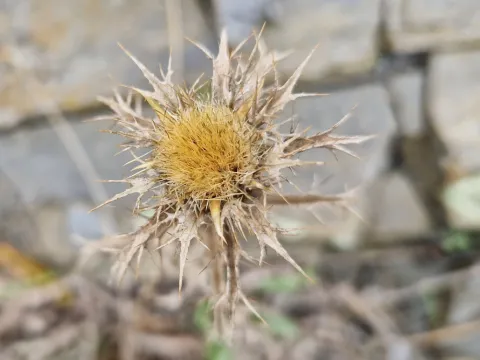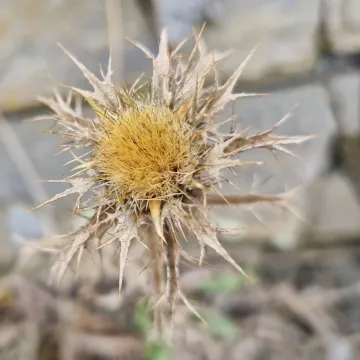
Spanish carline thistle
Carlina hispanica
Description
The Spanish carline thistle (Carlina hispanica) is a perennial herbaceous plant belonging to the Asteraceae family. This species is recognized for its unique, spiny appearance and its structural integrity, which makes it a popular choice for both specialized gardening and professional floristry.
Originating from the Mediterranean region, the species is naturally adapted to harsh, arid climates. Its native range spans across Southern Europe, where it thrives in exposed, rocky habitats and grasslands. The plant has evolved excellent drought tolerance, making it a suitable candidate for xeriscaping in various climatic zones.
Botanically, Carlina hispanica is characterized by a basal rosette of leaves and striking flower heads surrounded by shiny, spiny bracts. These bracts are often mistaken for flower petals due to their aesthetic appeal. The root system is deep and taproot-like, allowing the plant to reach water sources inaccessible to most garden crops.
Regarding agricultural requirements, the plant demands full sun exposure and soil with exceptional drainage. It performs poorly in heavy, clay-rich soils that retain moisture during winter months. Minimal soil intervention is required, as the species is accustomed to nutrient-poor environments. Propagation is carried out via seeds sown in early spring or autumn.
The primary economic use of this plant is found in the floral industry as a dried ornamental element. Its bracts retain their color and shape for long periods, which is highly valued for seasonal arrangements. While not typically a field crop, it remains a valuable specialty plant. Pests such as aphids may occur, and overwatering is the primary cause of root-related diseases.
Photo gallery