Carpenteria californica
Carpenteria californica
Description
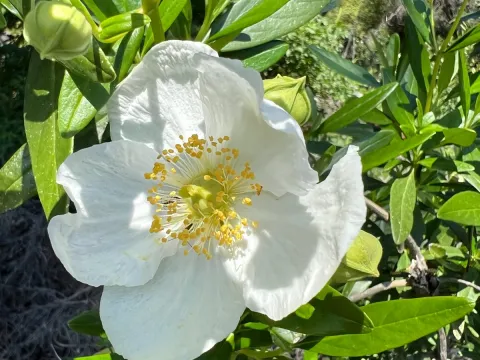
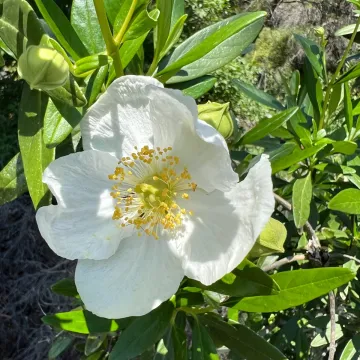
Carpenteria californica, commonly known as the bush anemone, is an exquisite evergreen shrub belonging to the Hydrangeaceae family. Native to the foothills of the Sierra Nevada mountains in California, this plant is highly prized in horticulture for its elegant foliage and fragrant, saucer-shaped white flowers with prominent yellow stamens.
Botanically, this shrub grows into a compact or medium-sized bush, typically reaching heights of 1.5 to 3 meters. Its leaves are opposite, lanceolate, and deep green, providing a beautiful year-round backdrop. The peak of its ornamental value occurs in late spring and early summer when the plant is covered in a profusion of white blooms.
For successful cultivation, Carpenteria californica requires well-draining, fertile soil with a neutral to slightly acidic pH. It performs best in locations that receive full sun, although in regions with scorching summer temperatures, providing partial shade during the hottest part of the day can help prevent leaf scorch and maintain plant vigor.
Cultural requirements include consistent watering during the establishment phase. Once mature, the plant is moderately drought-tolerant; however, regular irrigation is recommended to ensure optimal flowering. In colder regions, it is essential to plant it against a warm, protected wall to shield it from harsh, freezing winds and temperatures below -10°C.
- Soil type: Rich, well-draining, loamy soil.
- Watering: Deep watering, allowing soil to dry out between sessions.
- Pruning: Light trimming after flowering to encourage dense growth.
- Placement: Sunny spot with protection from strong northern winds.
In landscaping, this species is ideal for Mediterranean-style gardens, border plantings, or as a focal point in specialized collections. Its low-maintenance nature once established makes it a sustainable choice for gardeners seeking structural beauty with a long blooming season.
The plant is relatively resistant to pests and diseases, but gardeners should monitor for signs of aphids during the early growth stages of spring. Proper air circulation and avoiding overhead watering are key strategies to prevent fungal issues, such as root rot or mildew, which can arise in poorly drained or overly damp environments.
Photo gallery