Carthamus boissieri
Carthamus boissieri
Description
Carthamus boissieri is a distinct species of flowering plant belonging to the Asteraceae family. As a wild relative of the common safflower, it is highly valued by botanists and agricultural researchers for its exceptional genetic resistance to arid environmental stresses, making it a subject of interest for future crop development in desertified regions.
The plant is primarily native to the southeastern regions of Turkey and the Middle East, where it grows in rocky, semi-desert landscapes. It has evolved over centuries to thrive in environments with very low annual rainfall, showing remarkable physiological adaptations to conserve water while maintaining reproductive efficiency during the hottest months of the year.
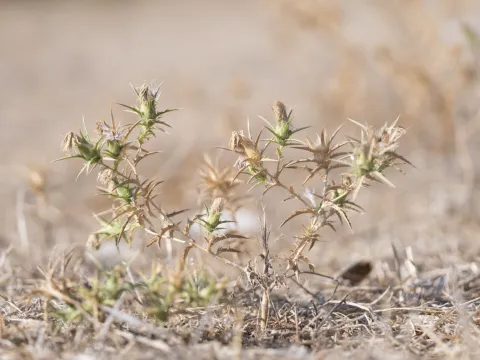
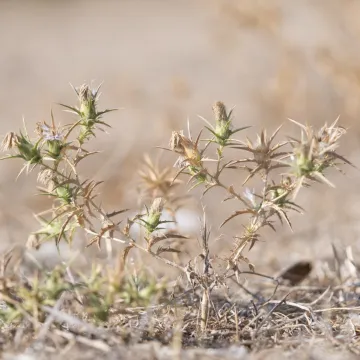
Botanically, it is characterized by a deep, robust taproot that allows it to access groundwater unavailable to shallow-rooted plants. Its foliage is rigid and often serrated with spines to deter herbivores, while its inflorescences form dense, bright flower heads that are highly attractive to local bee populations, effectively facilitating cross-pollination in sparse environments.
Successful cultivation of Carthamus boissieri requires attention to soil composition. It thrives best in well-draining, calcareous or sandy soils where water stagnation is impossible. In an agricultural setting, the plant requires minimal input, as it is largely self-sufficient in nitrogen uptake. However, cultivators must avoid over-irrigation, as even short periods of waterlogging can induce severe crown rot.
The primary economic use of this species is its potential as a genetic resource for breeding programs aiming to enhance drought tolerance in commercial safflower varieties. Diseases are typically limited to those caused by excessive humidity, such as powdery mildew or fungal leaf spots, while pest pressure is generally low due to the plant's structural defenses. Continued research is required to fully unlock its potential in regenerative agriculture.
Photo gallery