Cassia bauhinioides
Cassia bauhinioides
Description
Cassia bauhinioides is a perennial subshrub belonging to the family Fabaceae. Often classified under the genus Senna in modern taxonomy, this plant is recognized for its remarkable ability to thrive in extremely arid environments. As an agricultural object, it is primarily valued for its role in soil conservation and its potential utility as a drought-tolerant forage resource in semi-desert landscapes.
The native distribution area of this species encompasses the southwestern United States and northern Mexico. It is specifically adapted to environments with high solar radiation and irregular, low precipitation patterns. The plant naturally populates open, rocky substrates and desert grasslands, displaying high physiological tolerance to the harsh environmental stresses characteristic of these arid regions.
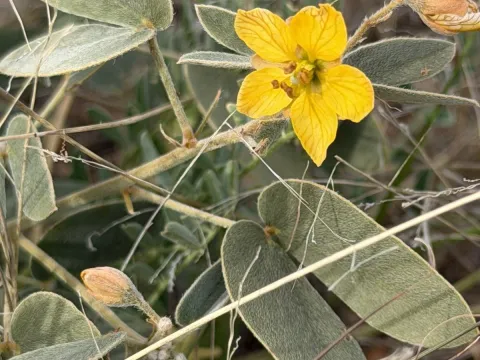
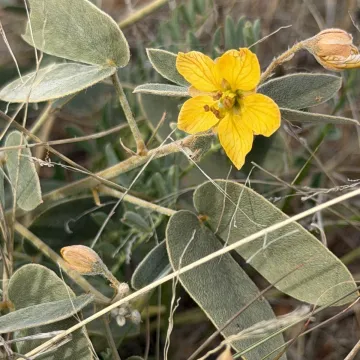
Botanically, the plant is characterized by a compact growth habit, typically reaching heights of 40-60 centimeters. It features distinct pinnately compound leaves covered in fine, silvery-gray hairs that provide a reflective surface, reducing transpirational water loss. During the blooming season, the plant produces bright yellow flowers, followed by typical legume fruits (pods) containing seeds that are essential for the propagation of the species.
Cultivation of Cassia bauhinioides requires well-drained, porous soils, preferably with a sandy or gravelly texture. The crop is highly sensitive to waterlogging, which often leads to root-related diseases and plant mortality. Agronomic management relies on maximizing sunlight exposure and maintaining minimal irrigation. Because the plant is adapted to nutrient-poor soils, it generally does not require intensive fertilization, as it fixes nitrogen through symbiosis.
The primary agricultural uses for this species include land restoration, protection against wind erosion, and as a specialized forage plant in arid zones where traditional crops fail. Key challenges in managing this crop include:
- High susceptibility to root rot if soil moisture exceeds optimal levels.
- Potential infestation by insect pests common to leguminous plants.
- The necessity of seed scarification to overcome natural dormancy prior to planting.
Photo gallery