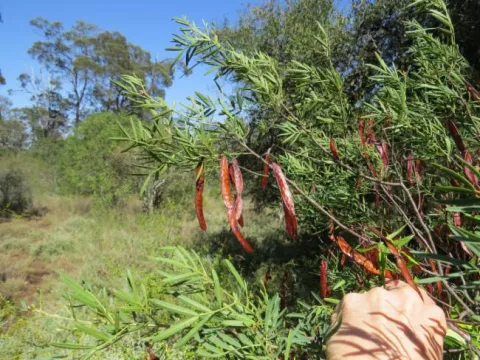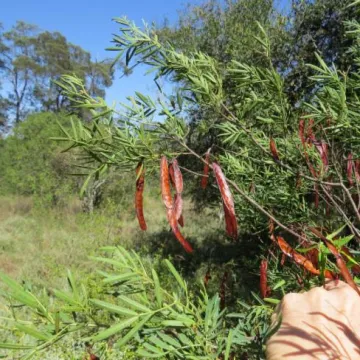
Cassia coronilloides
Cassia coronilloides
Description
Cassia coronilloides is a perennial semi-shrub species belonging to the Fabaceae family. It is recognized for its ecological resilience and its ability to thrive in challenging environmental conditions, making it a valuable plant for sustainable agricultural practices in arid and semi-arid regions.
The plant is native to the Australian continent, where it has adapted to dry, stony environments and areas with limited and irregular rainfall. Its geographical distribution is closely tied to its evolutionary ability to tolerate harsh climatic fluctuations and high solar radiation levels common in its home range.
Botanically, this species is defined by its pinnate leaves and vibrant yellow flowers. It possesses a deep-reaching root system, which is crucial for nutrient uptake and water extraction from lower soil horizons. The structural integrity of its stems makes it a robust component of natural and semi-managed landscapes.
Successful cultivation requires well-drained soils, preferably with a sandy or loamy texture. The crop is sensitive to waterlogging, which necessitates careful site selection in terms of slope and soil structure. It performs best under full sun exposure and is highly efficient at leveraging symbiotic nitrogen fixation to maintain its growth without heavy fertilization.
The economic and agricultural utility of this plant includes:
- Soil rehabilitation: preventing erosion and improving soil structure.
- Nitrogen enrichment: serving as a biological source of nitrogen for poor soils.
- Forage utility: providing a reliable source of biomass for livestock in dry conditions.
Typical plant health issues involve common agricultural pests like aphids and potential susceptibility to powdery mildew if humidity remains consistently high. Effective farm management depends on maintaining adequate plant spacing and ensuring proper drainage to prevent the development of root rot and other moisture-related pathologies.
Photo gallery