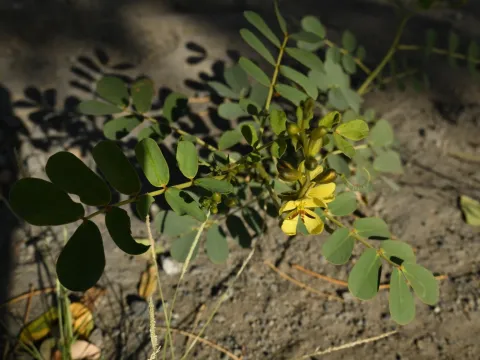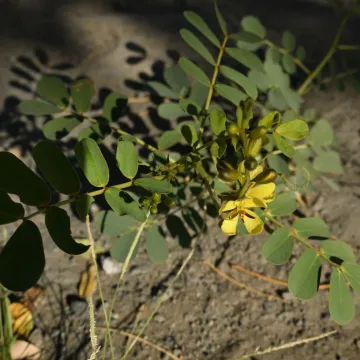
Cassia holosericea
Cassia holosericea
Description
Cassia holosericea is a perennial subshrub belonging to the Fabaceae family. As a specialized agricultural and botanical object, this species is recognized for its unique adaptations to arid environments, making it a subject of interest in both pharmacology and xerophytic crop research.
Native to the arid regions of North and Northeast Africa and parts of the Middle East, the plant thrives in environments characterized by extreme heat and erratic rainfall. It is naturally equipped to survive in nutrient-poor, sandy soils, contributing to the biodiversity of dryland ecosystems.
The botanical profile of the plant features dense, fine hairs covering the foliage—a morphological adaptation that reduces water loss and protects against high solar radiation. The plant produces vibrant yellow flowers and typical legume-type pods, with a deep root architecture designed to access minimal water resources at significant depths.
For successful cultivation, the species requires excellent soil drainage and full solar exposure. It is highly sensitive to waterlogging, which necessitates careful irrigation management in an agricultural setting. The crop is largely undemanding regarding soil nutrient content, provided the substrate remains well-aerated and free from heavy clay textures.
The economic and industrial applications of Cassia holosericea primarily revolve around its biochemical composition:
- Extraction of anthraquinones for the pharmaceutical industry.
- Land reclamation and soil stabilization in desertified regions.
- Traditional medicinal uses for digestive and dermatological health.
Management of pests and diseases is essential, particularly in controlled cultivation. The primary threats include root rot pathogens, which flourish in poorly drained conditions, and various sap-sucking insects that can compromise the plant's health. Integrated pest management strategies focusing on avoiding humidity stress are the most effective method for crop preservation.
Photo gallery