Cassia pleurocarpa
Cassia pleurocarpa
Description
Cassia pleurocarpa is a perennial shrub belonging to the Fabaceae family. As an adaptive species, it represents a specialized type of xerophytic vegetation capable of thriving in arid environments where water availability is extremely limited. While primarily known for its role in the Australian outback ecosystem, it offers significant potential for sustainable landscaping and environmental management in similar dry-climate zones worldwide.
The origin of this species is traced back to the arid and semi-arid regions of Australia. Over generations, the plant has developed robust survival mechanisms to endure harsh environmental conditions, including extreme summer temperatures and prolonged drought. Its natural habitat typically consists of sandy, rocky, or gravelly substrates, where it serves as a foundational component of the local plant community.
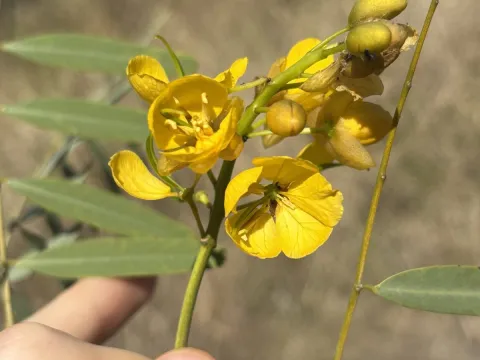
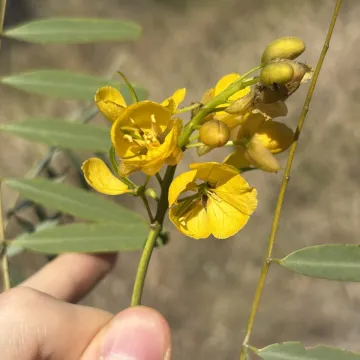
Botanically, Cassia pleurocarpa is characterized by its erect growth habit and distinctively shaped pinnate leaves that reduce moisture loss. During its peak flowering season, the plant produces vibrant yellow inflorescences that contrast sharply with its grey-green foliage. The fruit is a characteristic legume pod containing seeds that exhibit excellent longevity and are capable of dormant survival in dry soil until conditions become favorable for germination.
The agronomic requirements focus on ensuring excellent drainage, as the species is highly susceptible to root system degradation caused by waterlogged soil. It performs best in nutrient-poor, sandy soils with full sun exposure. Minimal intervention is required in terms of fertilization, as the plant is well-adapted to surviving in low-fertility areas. Propagation is primarily achieved through seeds, often requiring scarification to break the physical dormancy of the seed coat.
The хозяйственное (economic) and ecological value of this plant is multifaceted:
- Soil stabilization to prevent wind erosion.
- Nitrogen fixation, which enhances the fertility of degraded soils.
- Use in sustainable landscaping for dry-climate regions.
Photo gallery