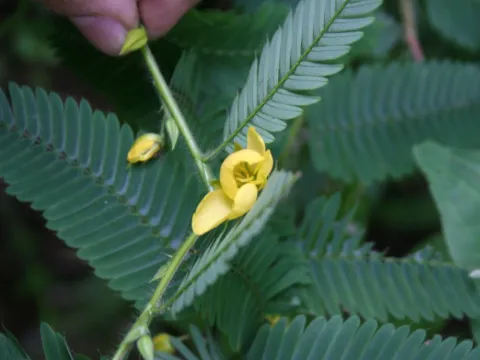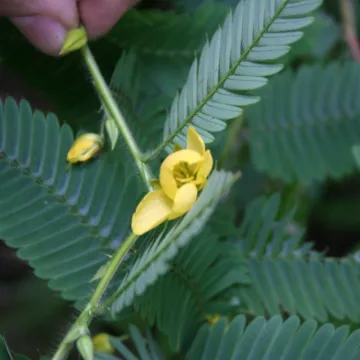
Cassia stenocarpa
Cassia stenocarpa
Description
Cassia stenocarpa is a perennial herb or small shrub belonging to the Fabaceae family, subfamily Caesalpinioideae. This species is recognized in tropical agriculture for its rapid growth and its ability to thrive in poor soils, making it an interesting subject for sustainable land management and cover cropping.
Originating from Central and South America, the species is native to tropical environments. It is predominantly cultivated in regions where high temperatures and distinct wet-dry cycles occur. The plant is well-adapted to the ecological niches of its origin, commonly found in meadows, forest fringes, and disturbed agricultural lands.
Botanically, it is characterized by pinnate leaves and bright yellow flowers arranged in axillary inflorescences. The most defining feature, which gives the plant its name, is its slender, linear seed pods. The root system is deep-reaching, which contributes to the plant's structural stability and resilience against moisture deficiency.
Successful cultivation requires full sun exposure and well-drained, fertile soil. While it is hardy, it is highly sensitive to frost, which limits its commercial range to tropical and subtropical zones. Agronomic management involves preparing a fine seedbed and ensuring proper spacing to promote air circulation, which helps in preventing common fungal issues.
The practical applications of Cassia stenocarpa are diverse and include:
- Enhancing soil fertility through nitrogen fixation.
- Utilization as a supplemental forage crop in extensive grazing systems.
- Use in local traditional medicinal practices and pharmacological research.
The crop is susceptible to common pests such as aphids and leaf-eating caterpillars, which can significantly reduce yields if left unmanaged. Fungal infections, particularly root rot, are frequent in waterlogged conditions. Maintaining proper soil drainage and implementing an integrated pest management program are essential for healthy crop development.
Photo gallery