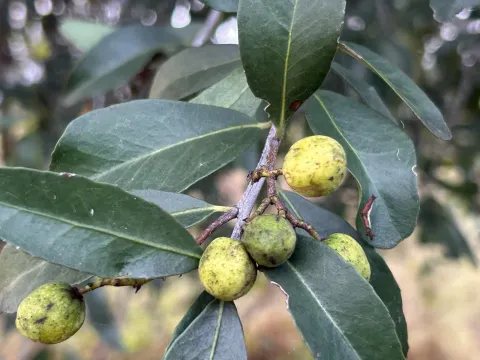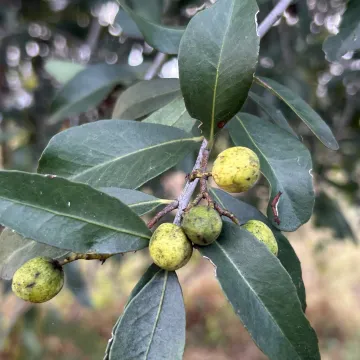
Cassine transvaalensis
Cassine transvaalensis
Description
Cassine transvaalensis is a perennial woody plant belonging to the Celastraceae family. Often referred to by various common names in its native range, it functions as a medium-to-large evergreen tree or a dense shrub. It is valued for its hardiness and the structural integrity of its growth, which makes it a notable candidate for ornamental use in arid and semi-arid climates.
The species originates from Southern Africa, particularly the Transvaal region, where it naturally thrives in savannahs and open woodlands. Its cultivation is primarily restricted to tropical and subtropical zones, as it requires a frost-free environment to maintain its health and physiological vigor throughout the year. It exhibits excellent adaptation to high solar radiation levels.
Botanically, the plant features leathery, elliptical leaves and a complex root architecture that allows it to survive in nutrient-poor soils. The flowers are relatively small, followed by the development of drupe-like fruits. These fruits serve as a significant food source for local fauna, which aids in seed dispersal and the natural regeneration of the species in its endemic environment.
Regarding agronomic requirements, Cassine transvaalensis demands well-drained, sandy-loam soils to prevent root asphyxiation. Irrigation management is critical; while the tree is drought-tolerant once established, supplemental watering during the peak growing season significantly enhances biomass production. Soil pH should ideally be kept near neutral to ensure optimal nutrient uptake and general plant vitality.
Economically, the species is utilized for its durable timber, which is suitable for small-scale construction and handcrafted items. Furthermore, it possesses medicinal properties recognized in traditional practices. Regarding phytosanitary aspects, growers must be vigilant against scale insects and fungal leaf spots, particularly during humid weather. Integrated pest management (IPM) strategies, including biological controls and proper spacing, are essential for maintaining healthy plantations.
Photo gallery