Cassiope mertensiana
Cassiope mertensiana
Description
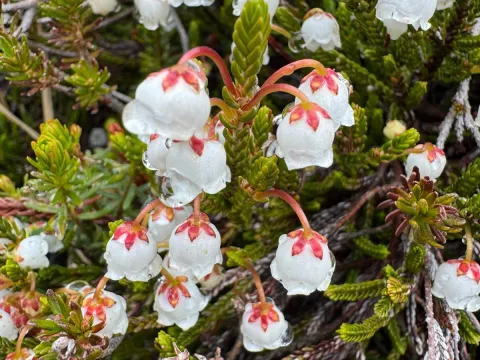
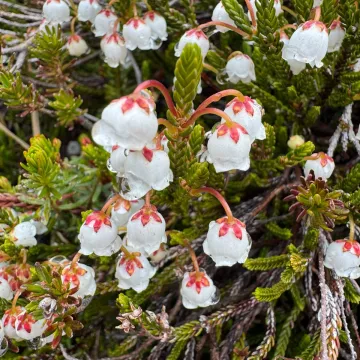
Cassiope mertensiana, commonly known as the white mountain heather, is a perennial evergreen subshrub belonging to the Ericaceae family. It is a diminutive, mat-forming plant characterized by tightly packed, scale-like leaves that overlap along the stem. Its growth habit allows it to thrive in harsh environments, making it a sought-after species for specialized landscape projects.
The native range of this species is confined to the mountainous regions of Western North America, stretching from Alaska down to California. It typically inhabits rocky slopes, subalpine meadows, and areas adjacent to melting snowfields, where it benefits from high atmospheric humidity and cold, well-drained soil environments throughout the growing season.
Botanically, the plant is noted for its slow-growing, creeping stems that provide a high level of winter hardiness. The blossoms, which appear in summer, are bell-shaped and typically white, providing a striking contrast against the dark green, scale-covered foliage. The plant's ability to withstand significant snow cover is a key adaptation to its native high-altitude habitat.
To successfully cultivate Cassiope mertensiana, one must provide conditions that mimic its wild environment. Key requirements include:
- Acidic, organic-rich, and well-draining soil.
- Partial shade, especially protecting the plant from intense afternoon sun.
- Consistent moisture levels without waterlogging.
- Cool summer temperatures and adequate air circulation.
In terms of agricultural and horticultural use, this species is primarily used in alpine rock gardens and as a feature plant in container gardening. It is highly valued for its texture and refined aesthetic, fitting perfectly into cool-climate garden themes. It is generally not suitable for mass commercial production due to its demanding nature and slow development cycle.
Regarding pest and disease management, the main threats are root rot caused by poor soil drainage and fungal infections resulting from stagnant air. Keeping the crown of the plant dry and ensuring the root zone has excellent aeration is essential for long-term health. Monitoring for common sap-sucking pests during drier periods is recommended to ensure robust growth.
Photo gallery