Cassiope selaginoides
Cassiope selaginoides
Description
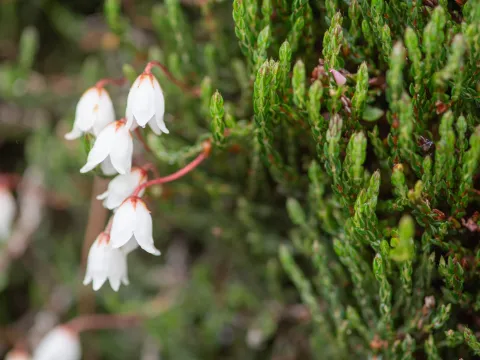
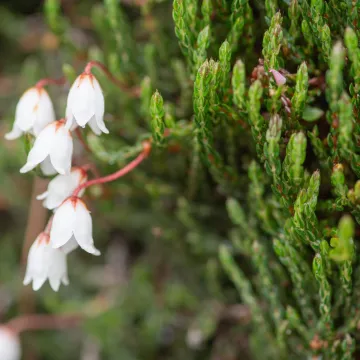
Cassiope selaginoides is an evergreen, dwarf shrub belonging to the Ericaceae family. Known for its distinct, moss-like appearance, this plant features stems tightly covered in overlapping, scale-like leaves. Its compact growth habit and elegant, bell-shaped flowers make it a highly prized species for botanical gardens and specialized alpine collections.
The plant originates from the high-altitude regions of the Himalayas, Myanmar, and Southwestern China. In the wild, it thrives in rocky, open moorlands and alpine meadows at extreme elevations. Cultivation of this species requires mimicking its natural mountain environment, which presents specific challenges in lowland or warmer climate zones.
Botanically, this shrub grows to a height of approximately 10 to 25 cm, forming dense, cushion-like mats. The leaves are small and leathery, providing year-round greenery. The flowers are typically white, solitary, and nodding, appearing in late spring and early summer. The beauty of the plant lies in the striking contrast between its fine foliage and its delicate, pure white blooms.
The agrotechnical requirements for growing Cassiope selaginoides center on maintaining cool, moist, and acidic conditions. It demands a well-draining soil medium, typically rich in peat or pine bark, to ensure roots remain aerated but never dry out completely. Regular watering with soft or rainwater is essential, as the species is sensitive to mineral salts found in hard water.
Pest and disease management primarily involves preventing environmental stress. Root rot, caused by stagnant water or poor drainage, is the most significant threat. Regular monitoring is necessary to keep the plant in peak condition.
- Maintain high air humidity during the growing season.
- Provide partial shade during the hottest parts of the day.
- Apply acidic, slow-release fertilizers formulated for Ericaceous plants.
- Ensure a layer of fine gravel mulch to keep the crown of the plant dry.
Photo gallery