Cassipourea gummiflua
Cassipourea gummiflua
Description
Cassipourea gummiflua is a distinctive evergreen tree species belonging to the Rhizophoraceae family. While the family is widely known for its mangrove members, this particular species has adapted remarkably well to terrestrial habitats, thriving in a variety of forested environments across the African continent.
The plant is native to tropical Africa, with its natural range stretching across diverse regions including Ethiopia, Kenya, and South Africa. It typically inhabits moist mountain forests, evergreen thickets, and riverine areas. Its distribution is highly dependent on humidity levels and the availability of nutrient-rich soils that allow for steady growth.
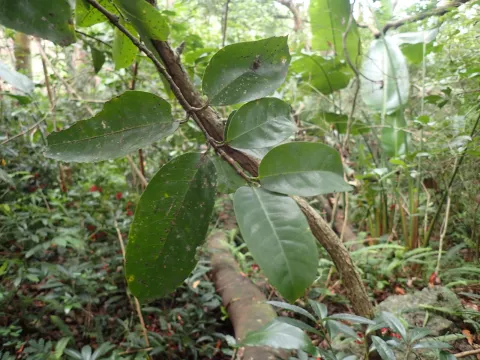
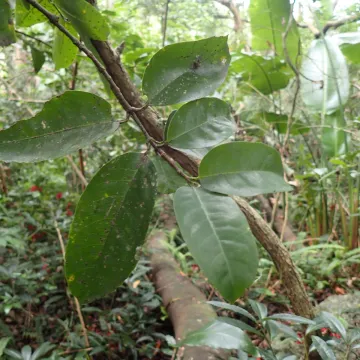
Botanically, this species is defined by its robust structure and dense, leathery foliage. The leaves are typically opposite, serrated at the margins, and provide significant leaf litter, which contributes to soil fertility in its native habitat. Its small flowers are often pollinated by insects, leading to the development of small, dry capsules containing multiple seeds.
Regarding agricultural management, the cultivation of this species requires careful site selection. It thrives best in well-drained, slightly acidic soils in frost-free tropical or subtropical climates. While it is relatively resilient, young seedlings require protection from extreme sun and competing weeds. Once established, the tree demonstrates high endurance and moderate drought tolerance, though it performs best with consistent rainfall.
Economically, the wood of Cassipourea gummiflua is valued for its strength and resistance to decay, making it suitable for construction and carpentry. The bark and leaves are also notable for their ethnobotanical use in traditional healthcare. In terms of health, the tree is generally robust, although occasional infestations by wood-boring insects or fungal pathogens may occur if the trees are planted in poorly ventilated or excessively stagnant environments.
Photo gallery