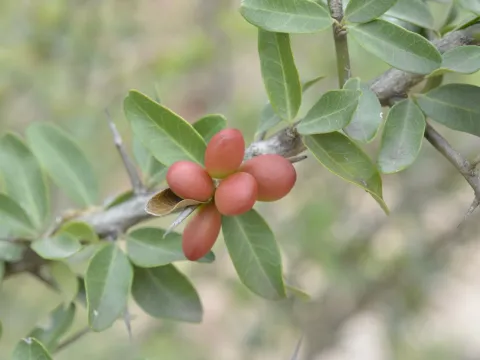
Castela coccinea
Castela coccinea
Description
Castela coccinea is a perennial shrub belonging to the Simaroubaceae family. Known for its resilience in arid environments, this plant species occupies a specific ecological niche, exhibiting unique morphological and physiological traits that allow it to thrive in regions characterized by low water availability and high solar radiation.
The plant is native to the tropical and subtropical regions of the Americas, primarily found in dry shrublands and rocky terrains. Its distribution is strongly correlated with soils that offer excellent drainage, as the species is highly adapted to the periodic droughts typical of its natural habitat in the Western Hemisphere.
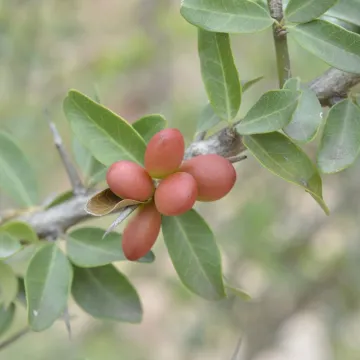
Botanically, Castela coccinea is characterized by its woody, often thorny stems and coriaceous, simple leaves. The root system is robust and deep-reaching, designed for moisture uptake from lower soil profiles. During its reproductive phase, the plant produces small flowers followed by drupe-like fruits, which are essential for its proliferation in diverse tropical environments.
Regarding agrotechnical requirements, the successful cultivation of this species depends on maintaining a strictly controlled moisture regime. Waterlogging is the primary cause of plant loss, hence the necessity for sandy or rocky substrates with superior drainage capabilities. Furthermore, the species requires intense sunlight and is highly sensitive to frost, necessitating protected cultivation in non-tropical zones.
The economic value of Castela coccinea is primarily associated with its potential in the pharmaceutical industry. The plant is rich in bitter compounds known as quassinoids, which have been studied for their potential antiparasitic, anti-inflammatory, and antimicrobial properties. Ongoing research aims to standardize extraction methods for these bioactive compounds, potentially positioning the species as a valuable crop for medicinal manufacturing.
- Exceptional drought resistance mechanisms.
- High sensitivity to root zone waterlogging.
- Significant content of bioactive quassinoids.
- Requirement for full spectrum sunlight exposure.
Photo gallery