Blue cupid's dart
Catananche caerulea L.
Description
Blue cupid's dart (Catananche caerulea L.) is a perennial flowering plant belonging to the Asteraceae family. It is widely recognized for its delicate, paper-like petals and is considered a valuable plant for both rock gardens and the dried flower industry.
The species is native to the Mediterranean region, specifically Southwestern Europe. It naturally thrives in dry, sunny, and rocky environments, which explains its remarkable resilience to drought and its preference for nutrient-poor, well-draining soil conditions.
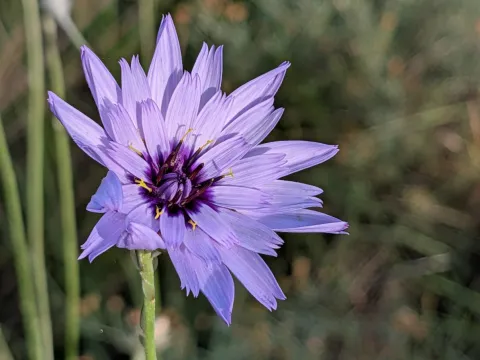
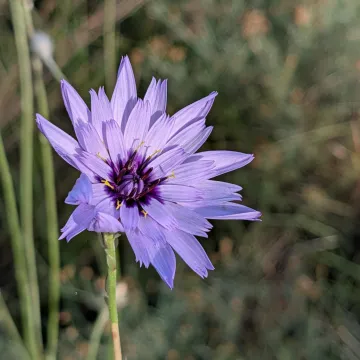
Botanically, the plant features a basal rosette of narrow, grass-like leaves and sturdy, tall stems reaching up to 60 cm. The flowers are daisy-like with a distinct blue or violet center and are surrounded by papery, silver-colored bracts, which are its most defining visual characteristic.
Cultivation requirements focus on providing a site with full sun and excellent drainage. It is crucial to avoid waterlogged soil, especially during the dormant winter period, as the roots are highly susceptible to rot. It is typically propagated by seeds sown in spring or by division of established clumps.
In terms of utility, it serves as an excellent ornamental perennial for borders and cottage-style gardens. It is also a staple in the floral trade for dried arrangements due to its ability to retain its form. Pests are minimal, though gardeners should watch for aphids in early spring and root decay caused by poor drainage.
Photo gallery