Nodding rockcress
Catolobus pendulus
Description
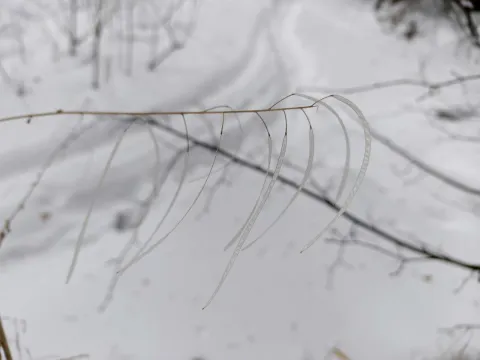
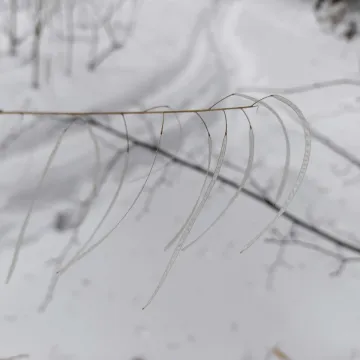
Nodding rockcress (Latin: Catolobus pendulus) is a herbaceous plant belonging to the Brassicaceae family. In botanical and agricultural studies, it is recognized for its unique structural adaptation — specifically, the tendency of its seed-bearing pods to droop during maturation, which distinguishes it from other species within the tribe.
The plant originates from the Eurasian steppe regions, where it has evolved to colonize various dry and open habitats. Its current geographical range spans across Eastern Europe, Siberia, and parts of Central Asia. It thrives in temperate climates, often colonizing disturbed soils, rocky outcrops, and fields where competition from dense vegetation is relatively low.
Morphologically, Catolobus pendulus typically reaches a height of 30 to 60 centimeters. It features a slender stem and relatively small leaves. The flowers are small, often white or yellowish, and are arranged in racemes. The most prominent feature is the pendulum-like structure of the siliques (seed pods), which allows for efficient seed dispersal through mechanical movement of the stem.
From an agronomic perspective, the species is not cultivated for commercial purposes. It is considered a plant of interest in ecological restoration and weed science. It requires well-drained, sandy or loamy soils to establish successfully. It does not demand high nitrogen inputs, which allows it to persist in nutrient-poor environments where other crops might struggle to survive.
While not a primary economic crop, it serves as a host for various insects and plays a role in local biodiversity. Management of this species in industrial agricultural zones involves standard weed control protocols, such as crop rotation and the use of broad-spectrum herbicides. Diseases affecting this plant are generally the same fungal and bacterial pathogens that target other wild Brassicaceae members.
- Family: Brassicaceae
- Native region: Eurasia
- Key characteristic: Pendulous seed pods
- Habitat: Steppes, dry fields, rocky slopes
Photo gallery