Catunaregam spinosa
Catunaregam spinosa
Description
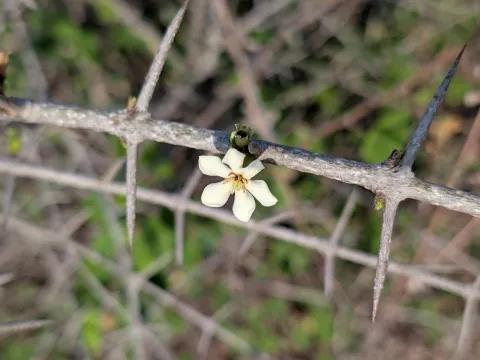
Catunaregam spinosa is a deciduous shrub belonging to the Rubiaceae family. Characterized by its sharp, robust thorns, it is commonly known for its structural role in local ecosystems and its ability to serve as a natural barrier in agricultural and residential settings.
Native to the tropical regions of Asia, including India and Indochina, this plant flourishes in diverse climates. Its natural habitat includes scrub forests and open plains, where it displays significant adaptation to fluctuating seasonal patterns of rainfall, making it a resilient species for various cultivation zones.
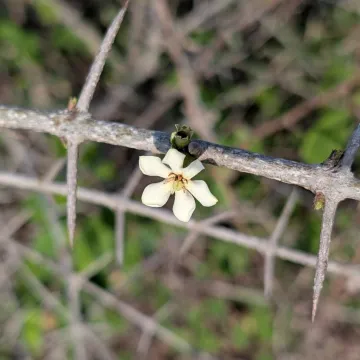
Botanically, the plant features glossy leaves and fragrant, creamy-white flowers that transition to yellow. The fruits are globose berries that contain numerous seeds. These thorns are not merely defensive; they are specialized branch structures that protect the plant from herbivores in its native environment.
For successful cultivation, Catunaregam spinosa requires a well-drained soil environment with adequate exposure to sunlight. While the plant is drought-tolerant once established, providing consistent hydration during the early growth stages is crucial for developing a strong root system. Minimal fertilization is usually sufficient, as the plant is well-adapted to nutrient-poor soils.
Beyond its landscape uses, the plant has significant historical utility. Various parts of the shrub, including its bark and fruit, are utilized in traditional medicinal practices for their pharmacological properties. Furthermore, the saponins found in the fruit have historically been used in local soap production and as a natural pesticide, highlighting its multifunctional value in sustainable agriculture.
- Excellent choice for creating security hedges.
- High adaptability to drought conditions.
- Source of natural saponins for traditional uses.
Photo gallery