Ceanothus divergens
Ceanothus divergens
Description
Ceanothus divergens, commonly known as a type of California lilac, is an evergreen shrub belonging to the Rhamnaceae family. It is a highly specialized plant species, noted for its compact growth habit and striking inflorescences, which distinguish it within the diverse genus of Ceanothus plants.
The native range of this species is primarily restricted to specific mountainous regions in California. It thrives in well-drained, rocky soils and is adapted to environmental conditions characterized by hot, dry summers and mild, wet winters. Understanding its ecological niche is crucial for successfully introducing the plant into residential or botanical gardens outside its native habitat.
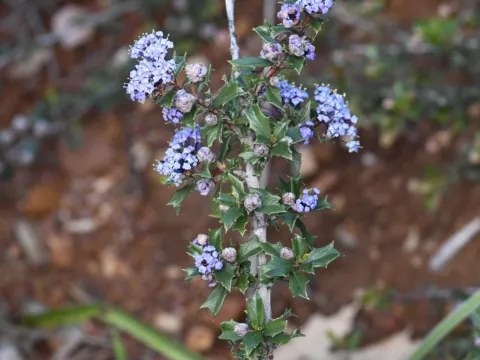
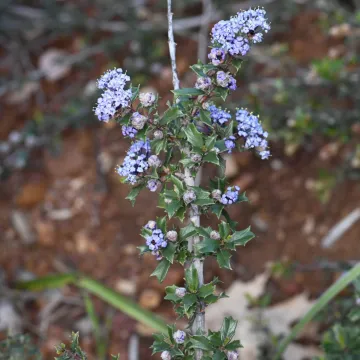
Botanically, the species features leathery, serrated leaves and branches that exhibit a rigid, spreading architecture. The flowers emerge in dense clusters, providing a significant visual impact with their vibrant blue-to-purple hues. These structural features, combined with its evergreen nature, provide year-round aesthetic value to landscaped environments.
Agricultural and gardening practices for this species must prioritize soil health. It requires excellent drainage to prevent root rot, which is the primary cause of mortality in cultivation. It prefers a full sun exposure and is remarkably drought-tolerant once it has established a deep, healthy root system. Over-watering and heavy, clay-based soils should be strictly avoided.
The main use of this plant is purely ornamental, often utilized in xeriscaping or native plant gardens. While it is not a major agricultural crop in the traditional sense, its maintenance includes pruning to shape and the monitoring of common pests.
- Common pests include aphids and scale insects.
- Root rot fungi are the most prevalent diseases due to moisture issues.
- Pruning should be performed after the flowering period to encourage new growth.
Photo gallery