Deerbrush
Ceanothus integerrimus
Description
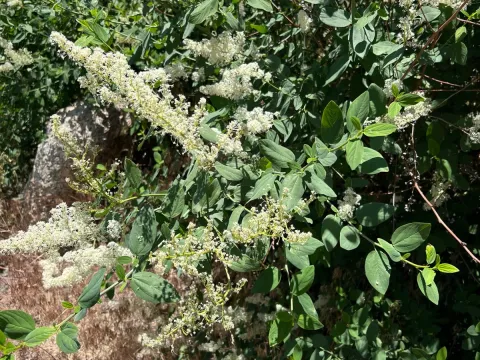
Deerbrush (Ceanothus integerrimus) is a deciduous shrub species belonging to the Rhamnaceae family. Known for its distinct, fragrant, and voluminous flower clusters, this plant is a staple in many native plant landscapes. It typically grows as an upright shrub, ranging from 3 to 12 feet in height, depending on the site conditions and the specific variety.
The plant is native to Western North America, predominantly found in the varied terrain of California and Oregon. It often thrives in coniferous forests, chaparral, and mountainous ridges. Because of its native environment, it is highly adapted to seasonal dry spells and is recognized for its role in native ecosystem biodiversity.
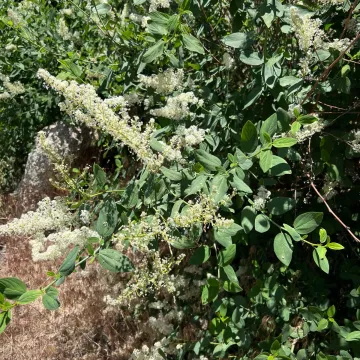
Botanically, it features smooth, greenish-yellow branches and alternate, oval-shaped leaves that can have smooth or finely serrated edges. The flowers, appearing in late spring and early summer, form elongated panicles. The floral display provides a striking visual impact, with colors ranging from creamy white to pale blue or lavender shades.
Cultivation requires well-drained, porous soil to prevent root issues. Deerbrush thrives in full sun but can tolerate partial shade, particularly in hotter climates. Once established, it is remarkably drought-tolerant, requiring little to no supplemental watering. It does not perform well in overly rich or heavily fertilized soils, as this can encourage weak, leggy growth.
- Excellent choice for xeric and low-water garden designs.
- Attracts pollinators such as bees and native butterflies.
- Provides soil stabilization for embankments and slopes.
- Requires minimal pruning to maintain a tidy appearance.
Economically and ecologically, Deerbrush is valued for its honey production and its ability to provide food and shelter for local wildlife. It is frequently employed in habitat restoration projects to prevent soil erosion. For home gardeners, it serves as an excellent specimen plant or a backdrop component in a Mediterranean or native-themed landscape.
Common issues include root rot, which typically occurs in clay-heavy soils or areas with poor drainage. While generally resistant to major pests, it may occasionally attract aphids or scale insects. Management strategies focus on providing optimal air circulation and ensuring the planting location mimics the natural drainage conditions of its native habitat.
Photo gallery