Monterey ceanothus
Ceanothus rigidus
Description
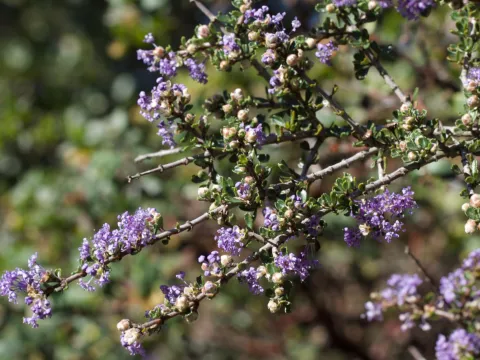
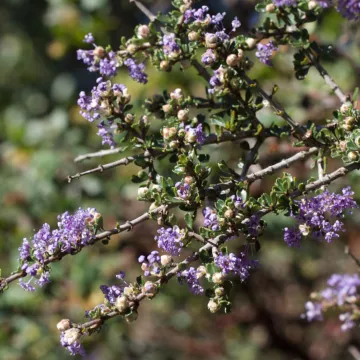
Monterey ceanothus (Ceanothus rigidus) is a captivating evergreen shrub belonging to the Rhamnaceae family. It is highly regarded in horticulture for its intense, vibrant blue flowers and dense, glossy foliage that remains attractive throughout the year.
Originating from the coastal regions of California, this species is naturally adapted to Mediterranean climates. It thrives in environments with mild winters and dry, warm summers, which are critical factors to consider when planning its placement in a garden setting.
From a botanical perspective, the plant is characterized by its stiff, woody stems and small, leathery leaves. The flowers are produced in dense, showy clusters, creating a dramatic visual impact during the peak flowering season, which typically occurs in early to mid-spring.
Successful cultivation requires soil with excellent drainage to prevent root rot, as the plant is highly susceptible to fungal issues caused by waterlogged soil. It demands a full sun exposure and protection from harsh winds, making it an ideal candidate for south-facing garden walls or slopes.
In landscaping, it is used for ornamental hedging, as a standalone specimen, or for erosion control on slopes due to its robust root system. Minimal maintenance is required, provided that the initial site preparation ensures appropriate soil aeration and drainage.
While relatively hardy, the plant can be affected by pests such as scale insects or spider mites, particularly in suboptimal conditions. Providing adequate air circulation and avoiding over-fertilization help maintain the plant's natural resistance to diseases and environmental stress.
Photo gallery