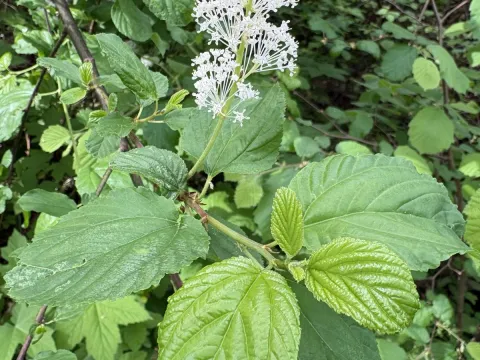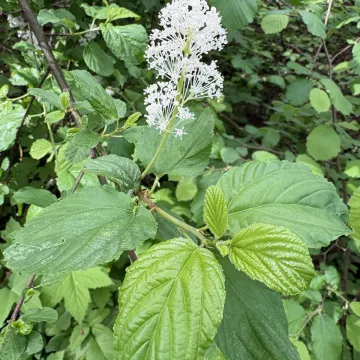
Red ceanothus
Ceanothus sanguineus
Description
Red ceanothus (Ceanothus sanguineus) is a deciduous shrub species belonging to the Rhamnaceae family. Known for its distinct reddish stems and attractive white flower clusters, it is a significant ornamental plant in temperate regions. It is highly valued for its natural resilience and ability to thrive in landscapes where other species might struggle due to poor soil conditions.
Native to the western parts of North America, this shrub is commonly found in forest openings and slopes. Its range extends across varying elevations, demonstrating a strong tolerance for different light and moisture regimes. Because the plant has the specialized biological ability to fix nitrogen in the soil, it is highly ecological, often serving as a pioneer species in post-disturbance environments.
Botanically, Ceanothus sanguineus features alternate, ovate leaves with serrated margins, providing a lush appearance throughout the growing season. The bloom period occurs in late spring to early summer, resulting in clusters of small, fragrant, white to pale pink flowers. These flowers are highly attractive to pollinators, making the shrub a perfect candidate for biodiversity-focused gardening projects.
For optimal growth, the species requires well-draining soil and exposure to full sun. It is essential to avoid overly fertile, damp conditions, as the root system is susceptible to decay in waterlogged soil. In terms of maintenance, this plant requires minimal intervention once established, but it appreciates a site where it can develop its wide-reaching root system without competition from more aggressive weeds.
Key horticultural recommendations:
- Provide minimal, light pruning to maintain the desired shape after flowering.
- Ensure excellent drainage by planting on slight mounds if the soil is heavy.
- Avoid heavy fertilization, as the plant relies on its natural nitrogen-fixing symbiosis.
- Use organic mulch to protect the soil surface and conserve moisture during the dry summer months.
Regarding pest and disease management, the primary concerns include fungal leaf spots and crown rot resulting from excessive humidity. Keeping the foliage dry through proper spacing and allowing for good air circulation will significantly reduce the risk of infection. With proper attention to these basics, the red ceanothus can serve as a durable and visually appealing perennial in diverse landscapes.
Photo gallery