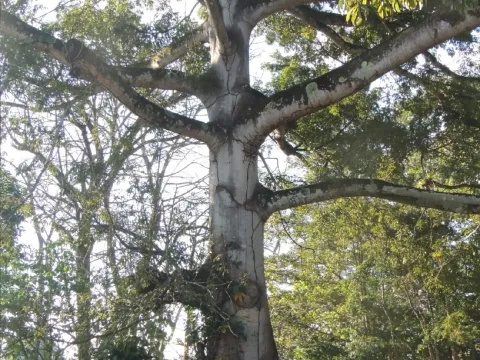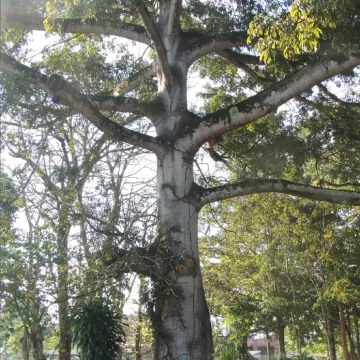

Ceiba tree
Ceiba pentandra (L.) Gaertn.
Description
Ceiba pentandra, commonly known as the kapok tree, is a massive tropical tree belonging to the Malvaceae family. It is distinguished by its enormous height, which can reach up to 70 meters, and its characteristic buttress roots that provide structural stability in the deep, moist soils of its native tropical rainforest habitats.
Originally native to Central and South America, the Caribbean, and parts of West Africa, the tree has been widely introduced to Southeast Asia. It thrives in high-temperature, humid environments where annual rainfall is significant. It is highly sensitive to frost, which limits its commercial cultivation strictly to the tropical belt.
From an agricultural standpoint, Ceiba pentandra requires well-drained, fertile soil to reach its full productive potential. Sunlight is a critical factor for development, as the tree is intolerant of shade. Standard cultivation practices involve wide spacing during plantation establishment, allowing the canopy to spread and ensuring that air circulation is maintained to prevent fungal build-up.
The primary economic output of the tree is kapok, a lightweight, buoyant, and water-resistant fiber extracted from the seed pods. This fiber is highly valued in insulation and stuffing applications. Additionally, the tree produces seeds rich in oil, which is processed for both industrial and domestic purposes, while the light, soft wood is commonly used for plywood, crates, and small watercraft.
Like any major agricultural crop, the kapok tree is subject to various phytosanitary threats. The most common pests include bark-boring beetles and various scale insects that affect foliage. Disease management focuses primarily on preventing waterlogging, which can lead to severe root decay, and maintaining overall tree vigor through appropriate nutrient management in the plantation soil.
Photo gallery