White stinkwood
Celtis africana
Description
White stinkwood (Celtis africana) is a deciduous or semi-evergreen tree belonging to the Cannabaceae family. Widely recognized for its aesthetic appeal, this species can reach impressive heights of 15 to 20 meters, featuring a spreading crown that provides significant shade. It is a highly respected tree in its native regions, known for both its structural beauty and ecological importance.
The tree is native to a broad range across Africa, stretching from the southern tip of the continent up to Ethiopia and the Arabian Peninsula. Because of its wide distribution, it displays remarkable adaptability to diverse climatic zones. It thrives in frost-free or mild climates and is often found in both forest margins and open savannah regions, which underscores its resilience to varying light and humidity conditions.
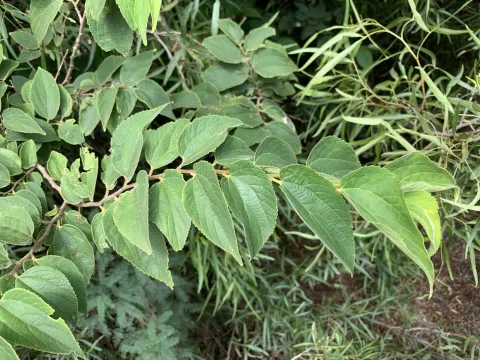
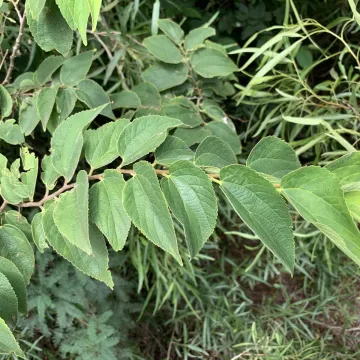
Botanically, the White stinkwood is characterized by its smooth, grey, often buttressed bark and simple, ovate leaves with serrated margins. The tree produces small, inconspicuous greenish flowers, which eventually give way to yellow-to-black drupes. These fruits are highly attractive to local bird species, making the tree an excellent choice for those looking to enhance biodiversity in their landscape.
Cultivation requirements are relatively straightforward, provided the tree is planted in deep, well-drained soil with plenty of sunlight. While it exhibits significant drought tolerance once established, consistent watering during the initial growth phase is essential for optimal root development. The species is also notably tolerant of various soil pH levels, ranging from neutral to alkaline, and can withstand coastal conditions and wind.
- Excellent shade provider for gardens
- High tolerance for urban pollution
- Supports local bird populations
- Attractive, smooth grey bark
- Versatile use in woodcraft
Economically, the wood of the White stinkwood is valued for its strength and toughness, making it suitable for furniture making and tool handles. In the landscape, it serves as an ideal specimen tree or windbreak. Pests are rarely a major concern; however, occasional monitoring for aphids or scale insects is recommended during the peak growing season to ensure the tree maintains its vigorous health and appearance.
Photo gallery