Southern hackberry
Celtis laevigata
Description
The Southern hackberry (Celtis laevigata) is a deciduous tree belonging to the Cannabaceae family. It is recognized as a robust tree that can reach significant heights, often growing up to 20–30 meters, characterized by a spreading crown and a naturally elegant appearance in forest landscapes.
The native range of this species covers the central and southern parts of North America, where it thrives primarily in floodplains, riverbanks, and moist bottomlands. Its ability to adapt to diverse ecological niches has allowed it to be introduced into various temperate climates across the globe for both ornamental and forestry purposes.
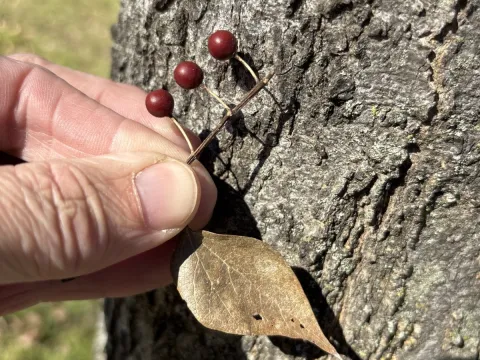
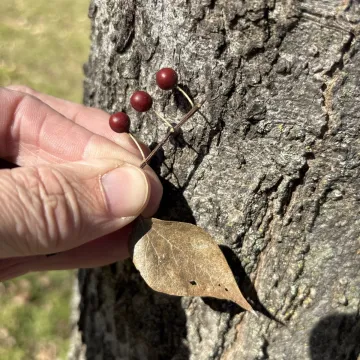
Botanically, Celtis laevigata is distinguished by its smooth, grey bark that may develop corky ridges as the tree matures. The leaves are ovate-lanceolate with serrated margins and an elongated, pointed tip. The tree produces small, inconspicuous flowers in the spring, followed by drupes that turn orange-red or dark purple, serving as a primary food source for various bird species.
Regarding climate and soil requirements, the Southern hackberry prefers deep, moist, and well-drained soils, although it shows remarkable tolerance for a wide range of conditions, including periodic flooding and dry spells. Agronomic care involves structural pruning to develop a strong canopy and monitoring soil moisture during the establishment phase of young trees in nurseries or parks.
Economic and practical applications of the species are broad. The wood is known for its strength, toughness, and flexibility, making it a preferred material for manufacturing furniture, crates, and specialized sports equipment. In landscape design, the tree is frequently chosen for urban street plantings due to its high tolerance for pollution and its ability to provide significant shade.
- Excellent tolerance to urban air pollution
- High suitability for stream bank stabilization
- Valuable habitat and food source for wildlife
- Strong, resilient, and versatile timber
- Low maintenance requirements once established
Typical health issues include vulnerability to powdery mildew and various gall-forming insects that cause leaf distortion. Despite these potential pests, the Southern hackberry remains a reliable and long-lived choice for large-scale landscaping projects, provided it is planted in an appropriate location with adequate space for root and crown expansion.
Photo gallery