Cenchrus australis
Cenchrus australis
Description
Cenchrus australis is a perennial grass species belonging to the Poaceae family. Known for its robust growth habit, this plant forms dense tufts that make it a significant component of grassland ecosystems, particularly in regions where it is native or naturalized.
The species originates from Australia and is well-adapted to subtropical environments characterized by periods of intense heat and variable rainfall. Over time, its resilience has led to its utilization in various global agricultural contexts, especially in areas with sandy or light-textured soils where other forage crops might struggle.
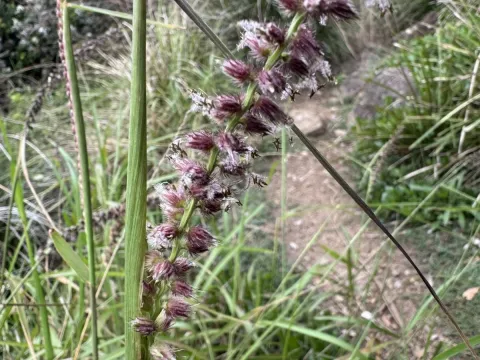
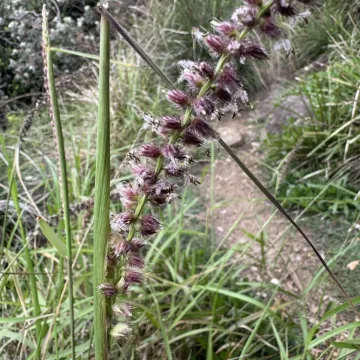
Botanically, Cenchrus australis is defined by its distinctive burr-like inflorescences, which consist of spiky bristles surrounding the spikelets. These bristles not only provide physical protection but also aid in seed dispersal. The leaves are typically linear and rigid, reflecting the plant's evolutionary strategy to conserve water in arid conditions.
Cultivation of this crop requires well-drained soils and high levels of solar radiation. It is highly drought-tolerant, which makes it an excellent candidate for regions with limited irrigation resources. Agronomic management involves light fertilization and careful control of grazing pressure to ensure the plant's longevity and productivity throughout the season.
In terms of agricultural utility, Cenchrus australis is primarily valued as a pasture grass. It is known for its ability to withstand grazing pressure and its capacity to recover quickly after defoliation. Furthermore, it is frequently employed in soil conservation projects to stabilize slopes and prevent wind and water erosion in vulnerable landscapes.
- Exceptional heat and drought tolerance.
- Strong root system for soil stabilization.
- Good regrowth capability under moderate grazing.
Regarding health management, the crop is susceptible to certain fungal leaf spot pathogens if planted in high-humidity areas without proper air circulation. Integrated pest management practices, including proper stocking rates and the selection of disease-resistant varieties, are crucial for maintaining healthy and productive stands.
Photo gallery