Coastal sandbur
Cenchrus spinifex
Description
Coastal sandbur (Cenchrus spinifex) is an annual grass species belonging to the Poaceae family. While it is not an agricultural crop, it is recognized as a significant noxious weed worldwide. In agronomy, it is treated primarily as a pest that competes with crops for soil nutrients, water, and sunlight, leading to notable reductions in agricultural yields.
The species originated in the Americas and has since spread to numerous tropical and temperate regions globally. It thrives in open, sunny environments and is particularly common in sandy or gravelly soils. Due to its opportunistic nature, it frequently colonizes cultivated fields, pastures, roadsides, and riverbanks, where it can quickly establish dense, monotypic populations.
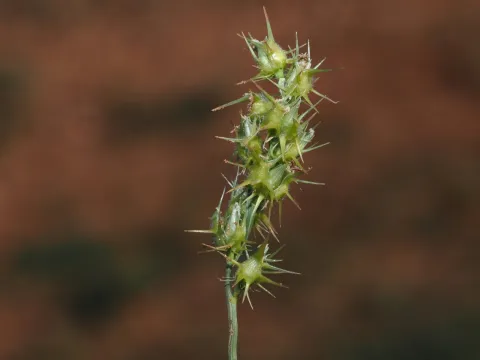
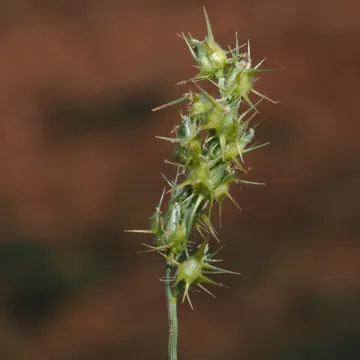
Botanically, the plant is distinguished by its inflorescences, which develop into spiny, bur-like burs. Each bur contains several spikelets armed with sharp, rigid spines. This structure is an evolutionary adaptation for dispersal; the burs easily attach to the fur of animals, footwear, and machinery, which facilitates long-distance transport and successful colonization of new areas.
Coastal sandbur is highly adaptable to varied climatic conditions, showing significant resilience to drought and heat. It begins its growth cycle in late spring and continues throughout the summer, effectively crowding out less aggressive plant species. Its root system is relatively shallow but extensive, allowing it to quickly absorb moisture, which makes it particularly competitive in arid climates.
Integrated weed management for Cenchrus spinifex includes:
- Strict weed seed prevention and field sanitation protocols.
- Implementation of effective crop rotation to disrupt weed life cycles.
- Strategic application of selective herbicides during the early seedling stage.
- Mechanical control, such as tillage or mowing before seed head formation.
- Cleaning equipment before moving between infested and non-infested areas.
The economic impact of the coastal sandbur is overwhelmingly negative. Beyond its competition with row crops, the plant poses a direct health threat to livestock. When present in fodder or grazing pastures, the sharp spines cause mechanical injuries to the mouth, tongue, and stomach of cattle and sheep, often leading to secondary infections and reduced animal health.
Photo gallery