Stemless knapweed
Centaurea acaulis
Description
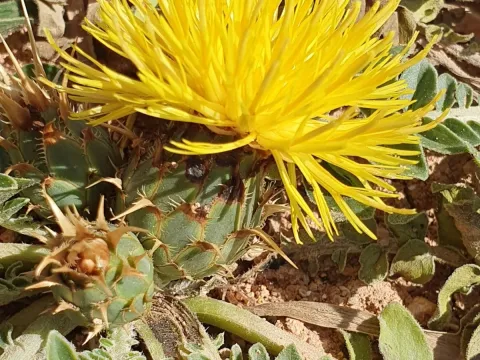
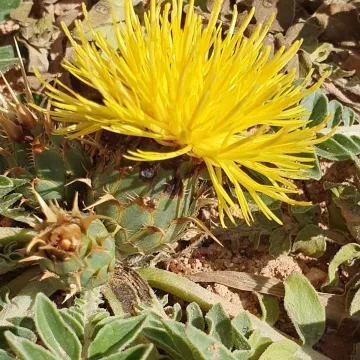
Stemless knapweed (lat. Centaurea acaulis) is a distinctive perennial plant belonging to the Asteraceae family. As the name suggests, this species is defined by its acaulescent (stemless) growth habit, where the vibrant flower heads sit directly atop a low-lying rosette of finely divided leaves, creating a compact and aesthetically striking appearance.
Originating from the arid landscapes of North Africa, particularly regions within Morocco and Algeria, this plant is well-adapted to harsh environmental conditions. It is typically found in rocky habitats and semi-desert areas, where it has evolved physiological mechanisms to thrive under intense heat and unpredictable moisture availability.
The botanical structure of Centaurea acaulis is dominated by its deep taproot system, which serves as a reservoir and anchor in stony substrates. The foliage is often covered with a fine pubescence, an evolutionary adaptation to reduce transpiration. The flowers exhibit shades typically ranging from soft pink to deeper purple hues, providing a striking contrast against the pale leaves.
Cultivation requires strict adherence to soil conditions. The plant demands excellent drainage, as it is highly susceptible to root rot if waterlogged. Growers should ensure that the planting medium is sandy or gravelly, mimicking the plant's native habitat. Providing full exposure to sunlight is essential for healthy development, as shading can lead to elongated, weak growth and increased vulnerability to disease.
In terms of usage, the stemless knapweed is primarily valued as an ornamental specimen in xeriscaping, rock gardens, and arid-climate botanical collections. While it does not represent a major industrial crop, it is of interest in research regarding drought-resistant landscaping solutions. Common pests include aphids, and disease management is focused almost entirely on preventing fungal pathogens caused by improper watering techniques.
- High drought tolerance.
- Requires well-drained, gritty soil.
- Full sun exposure required.
- Poor tolerance for humidity.
- Ideal for xeriscapes and rock gardens.
Photo gallery