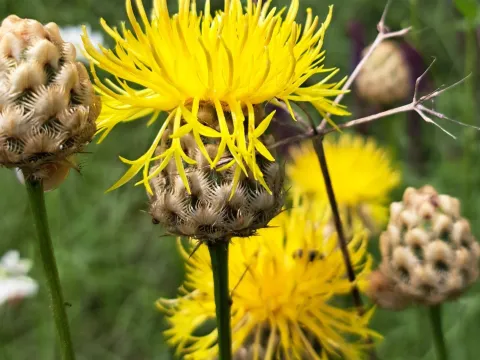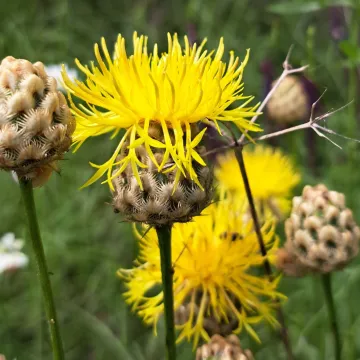
Eastern cornflower
Centaurea orientalis
Description
Eastern cornflower (Centaurea orientalis) is a perennial herbaceous plant belonging to the Asteraceae family. Known for its distinct yellow blooms and robust growth habit, it is recognized in agricultural circles as a hardy species suitable for sustainable farming and apiculture.
The plant originates from the steppe regions of Eurasia, encompassing territories from Eastern Europe to Central Asia. Its natural habitat suggests a high adaptability to varying climatic conditions, specifically regarding heat tolerance and cold hardiness during winter dormancy periods.
Botanically, Centaurea orientalis features a deep taproot system, which contributes to its drought resistance. The plant displays pinnately lobed leaves and large, radiant yellow flower heads that bloom throughout the mid-summer season, providing significant forage for pollinators in diverse environments.
Regarding soil and cultivation requirements, the species thrives in well-drained, neutral-to-alkaline soils exposed to full sunlight. It is essential to ensure that the site has low humidity levels to prevent root rot and the development of fungal pathogens. Minimal tillage is often sufficient for establishing a healthy stand.
Common management practices include:
- Strategic timing of seed sowing in early spring.
- Controlled weed management during the seedling stage.
- Pest monitoring for aphids and stem borers.
- Soil pH adjustment to maintain optimal growth conditions.
In terms of practical utility, it serves as a valuable nectar source for honey bees and finds niche applications in herbal medicine and decorative floriculture. By maintaining correct spacing and avoiding excess nitrogen fertilizers, producers can ensure consistent yields and plant health throughout the growing cycle.
Photo gallery