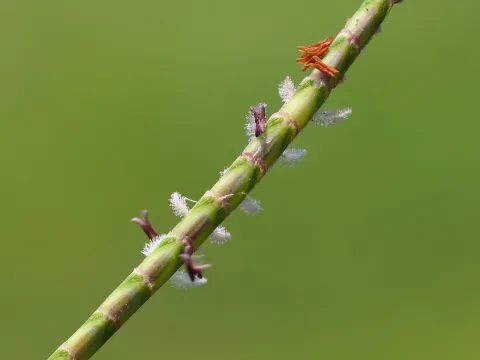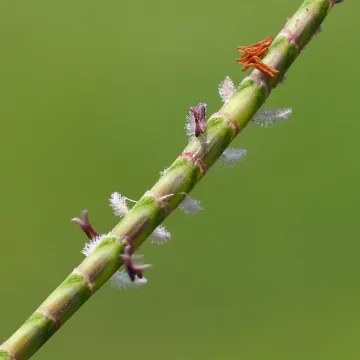
Centipede grass
Eremochloa ophiuroides (Munro) Hack.
Description
Centipede grass (Eremochloa ophiuroides) is a creeping perennial grass belonging to the Poaceae family. Primarily utilized as a low-maintenance turfgrass, it is highly valued for its ability to form a dense, uniform mat that requires significantly less fertilizing and mowing than other popular lawn species, such as St. Augustine or Bermuda grass.
Native to Southeast Asia and China, this species has been naturalized in many tropical and subtropical regions. Its distribution is particularly prominent in the Southeastern United States, where the climate provides the warm, moist conditions necessary for the grass to thrive during its active growing season, which lasts from late spring through early autumn.
Botanically, Centipede grass is characterized by its prostrate growth habit and stoloniferous nature. It produces light green, relatively broad leaves and typically reaches a height of only a few inches. The root system is shallow, which dictates its preference for consistently moist soil conditions, although it possesses moderate tolerance for occasional dry spells compared to other warm-season turf species.
Agronomic requirements for this crop focus on soil quality and pH management. It prefers acidic soils, typically with a pH range of 5.0 to 6.0, and often displays signs of iron chlorosis if the soil is too alkaline. Management includes moderate nitrogen fertilization, as excessive amounts can make the turf susceptible to cold damage and disease outbreaks, particularly during the winter dormancy period.
- Low fertility requirements
- High tolerance to acidic soil conditions
- Excellent weed suppression due to density
- Slow vertical growth rate
Centipede grass is widely used for residential lawns, roadside verges, and low-traffic park areas. The most significant disease is the so-called "Centipede grass decline," often associated with excessive fertilization and soil moisture imbalances. Common pests include ground pearls, mole crickets, and nematodes, which must be managed through integrated pest control strategies to maintain a healthy turf stand.
Photo gallery