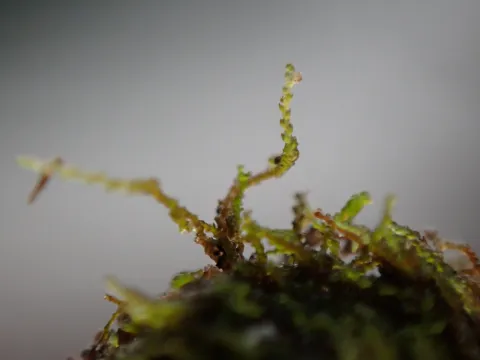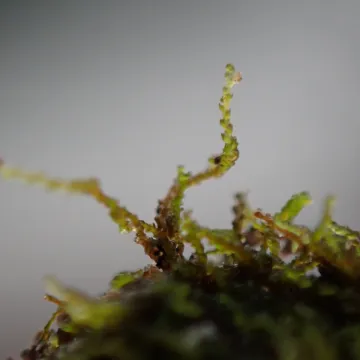
Spreading threadwort
Cephaloziella divaricata
Description
The spreading threadwort (Cephaloziella divaricata) is a small species of liverwort belonging to the Cephaloziaceae family. While it is not an agricultural crop in the traditional sense, its presence is vital for soil stabilization and ecological succession in various habitats across the Northern Hemisphere.
The distribution of this species is extensive, spanning temperate and boreal regions. It is typically found in open areas with disturbed soil, rocky outcrops, and nutrient-poor ground. Due to its hardy nature, it successfully colonizes environments where other vascular plants struggle to survive.
Botanically, it is defined by its diminutive size and filamentous stems. The leaves are small, bilobed, and typically spread out along the stem, which gives the plant its common name. The coloration ranges from deep green to reddish-brown, a trait influenced by exposure to sunlight and environmental moisture levels.
The environmental requirements for Cephaloziella divaricata include acidic substrates and periodic moisture. It does not require conventional fertilization or agricultural maintenance. Its life strategy relies on the ability to withstand desiccation and rapidly recover once moisture becomes available, making it well-adapted to unstable, thin soils.
Economic applications are centered on its role in environmental monitoring and soil erosion control. This liverwort acts as a bioindicator for habitat health. It is remarkably resilient to pests and diseases, which is a common trait among such bryophytes, allowing it to maintain stable populations in natural ecosystems.
Photo gallery