Snow-in-summer
Cerastium candidissimum
Description
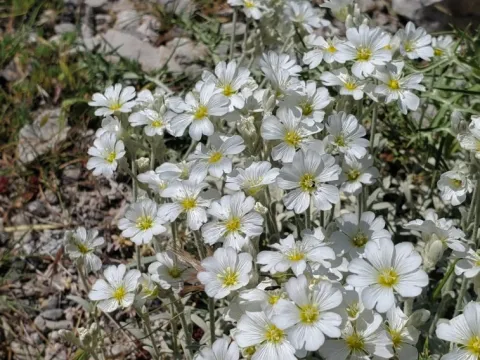
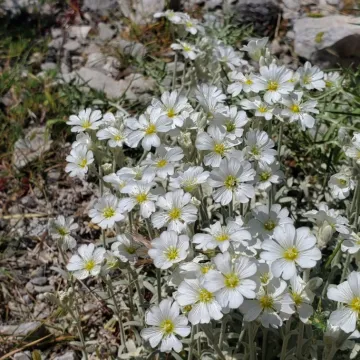
Cerastium candidissimum, commonly known as a type of snow-in-summer, is a perennial flowering plant belonging to the Caryophyllaceae family. It is highly valued for its striking silver-grey foliage and dense, matted growth habit, which allows it to form a decorative, carpet-like cover over rocky or sandy terrain.
The plant originates from the mountainous regions of Greece and the Balkans, where it thrives in harsh, rocky soil conditions. Due to its evolutionary background, it is exceptionally drought-tolerant and well-suited for cultivation in temperate climates, provided the drainage is excellent and the soil remains lean.
Botanically, this species is characterized by small, lance-shaped leaves covered in fine, white, silky hairs. The flowers appear in late spring and early summer, presenting as classic five-petaled white blooms that create a stunning contrast against the metallic appearance of the stems. Its low profile makes it an ideal candidate for rock gardens and borders.
Successful cultivation requires full sun exposure and poor, well-draining soil. It is critical to avoid waterlogging the roots, as high humidity and moisture retention can quickly cause root rot and fungal infections. Maintenance is minimal; light trimming after flowering helps to keep the plants tidy and encourages a fresh flush of growth.
The plant is mainly used in landscape design for ground cover or alpine-style plantings. While generally robust, gardeners should be vigilant against aphids and powdery mildew in areas with poor air circulation. Proper spacing during planting is essential to ensure adequate airflow and to prevent the development of common diseases associated with overcrowding.
Photo gallery