Cerastium grandiflorum
Cerastium grandiflorum
Description
Cerastium grandiflorum, commonly known as a type of snow-in-summer or mouse-ear chickweed variant, belongs to the Caryophyllaceae family. This perennial crop is highly valued for its fast-spreading habit and striking silvery foliage, making it a staple in alpine and rock garden horticulture.
Originating from the mountainous regions of Southeastern Europe, this plant has spread as an ornamental throughout various temperate zones. It thrives in full sun, which is essential for maintaining the plant's characteristic silvery pubescence and encouraging a dense, prolific blooming habit during late spring and early summer.
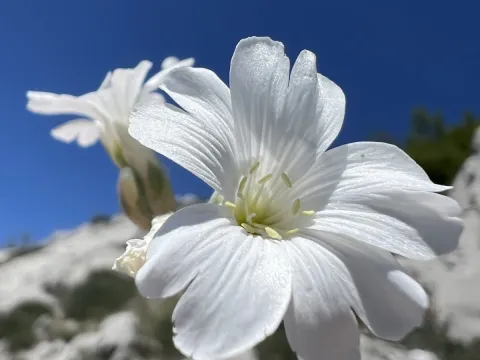
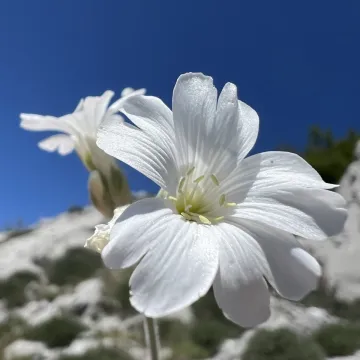
Botanically, it is a low-growing mat-forming perennial with stems that easily root as they spread across the ground. The leaves are small, lanceolate, and covered with fine hairs, which provide the plant with its drought-tolerant nature. The flowers are relatively large, pure white, and star-shaped, covering the entire surface of the plant during its peak blooming period.
Regarding soil and cultural requirements, it favors well-drained, nutrient-poor, rocky, or sandy substrates. It performs poorly in heavy, waterlogged clay soils, which often lead to crown rot. Maintenance includes annual post-flowering shearing, which keeps the mat compact, prevents excessive self-seeding, and encourages the production of new, fresh foliage for the following season.
- Excellent drought tolerance.
- Superior performance in poor soils.
- Aggressive growth for weed suppression.
- Minimal fertilization needs.
In terms of agricultural and horticultural use, it is utilized as an effective ground cover to control soil erosion on slopes and as a filler for gaps between paving stones. Because of its dense growth habit, it effectively shades out competing weeds, serving as a low-maintenance cover that protects the soil structure in ornamental gardens.
The primary pest and disease challenges are almost exclusively related to environmental moisture levels. Over-watering or high humidity can lead to fungal pathogens like damping-off or root rots. To ensure longevity, it is crucial to plant it in a site with excellent air circulation and to avoid overhead irrigation, especially in humid or rainy climates.
Photo gallery