Climbing corydalis
Ceratocapnos claviculata
Description
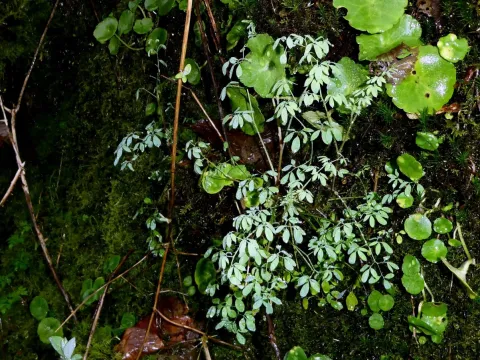
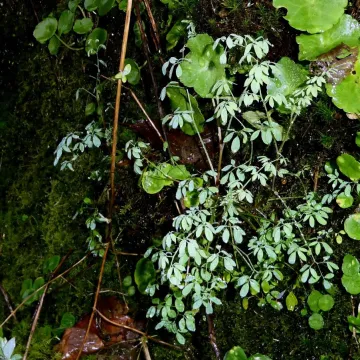
Climbing corydalis (Ceratocapnos claviculata) is a distinctive herbaceous plant belonging to the Poppy family (Papaveraceae). While it is not a traditional food crop, it holds a unique niche in specialized ornamental horticulture and ecological landscaping due to its climbing growth habit.
The native range of this species extends across Western and Central Europe, where it primarily inhabits woodlands and rocky, moist slopes. It has evolved to thrive in environments that offer moderate sunlight and high humidity, which are essential factors to consider when introducing this plant to a new cultivation site.
Botanically, the species is characterized by its slender, scrambling stems equipped with tendrils that allow it to climb over other vegetation or supports. Its flowers, which are pale yellow or creamy-white, appear in racemes, providing a delicate and graceful appearance that is highly sought after by garden enthusiasts.
In terms of agricultural requirements, climbing corydalis favors well-drained, nutrient-rich soils that retain moisture without becoming waterlogged. Successful cultivation involves selecting semi-shaded locations to protect the plant from harsh, direct sunlight, while ensuring that the soil remains consistently moist throughout the growing season.
Regarding pests and diseases, the plant is susceptible to common garden threats such as aphids and slug infestations, particularly in moist, sheltered areas. Regular monitoring and integrated pest management are recommended to maintain plant vitality, as well as maintaining proper spacing to ensure adequate air circulation to prevent fungal pathogens.
Photo gallery