Ceratodon moss
Ceratodon purpureus
Description
Ceratodon purpureus, commonly known as Ceratodon moss or redshank, belongs to the family Ditrichaceae. While it does not fall under conventional food crops, in the fields of environmental agronomy and landscaping, it is recognized as a significant biological agent for soil stabilization and environmental assessment.
The species boasts a truly global distribution, found on every continent, including Antarctica. This widespread prevalence is attributed to its remarkable ecological plasticity, allowing it to colonize challenging environments such as fire sites, polluted industrial grounds, and compacted soil where many vascular plants would fail to survive.
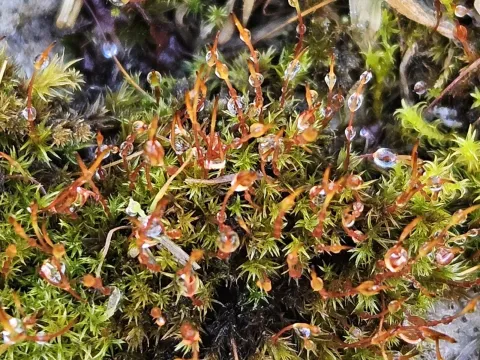
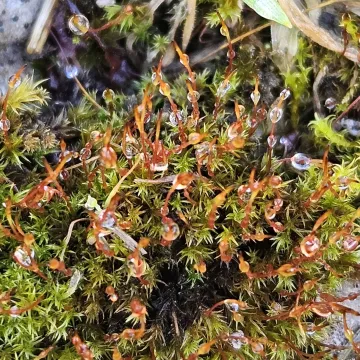
The plant grows in compact, cushion-like tufts that can range from deep green to a distinct reddish-purple hue. The most striking visual feature is the long, reddish-purple seta (stalk) that supports the spore-bearing capsule, which serves as a definitive characteristic for field identification among botanists and researchers.
Cultivation requirements for Ceratodon purpureus revolve around light exposure and substrate stability. It thrives in well-lit, exposed locations and requires substrates that are not prone to waterlogging. Unlike crops that demand nutrient-rich soil, this species excels in nutrient-poor, mineral substrates, making it an excellent candidate for greening urban rooftops and disturbed soil areas.
Economically and scientifically, it serves as a valuable bioindicator. Its physiological response to heavy metals and atmospheric pollution makes it an essential tool for monitoring air quality in agricultural buffer zones. Furthermore, its role as a pioneer species is vital for initiating soil succession processes, protecting topsoil from wind and water erosion in unstable agricultural landscapes.
- Extreme environmental resilience
- Rapid colonization of disturbed habitats
- Distinctive purple-red coloration
- Value in bioindication of environmental health
Photo gallery