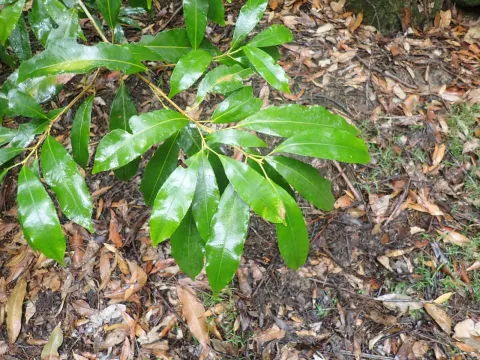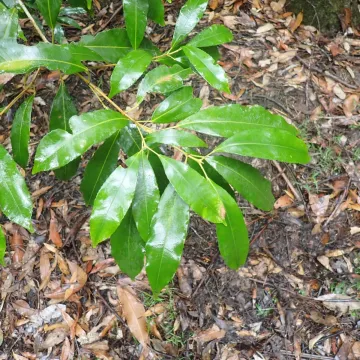
Coachwood
Ceratopetalum apetalum
Description
Coachwood (Ceratopetalum apetalum) is a significant evergreen tree species belonging to the Cunoniaceae family. It is highly valued in forestry for its straight-grained, durable, and aesthetically pleasing timber, making it a staple of the Australian hardwood industry.
The native distribution of this species is confined to the warm temperate and subtropical rainforests of eastern Australia, particularly in New South Wales and Queensland. It thrives in high-rainfall areas and is typically found growing on rich, alluvial, or volcanic soils, often in sheltered gullies that provide protection from drying winds and harsh conditions.
Botanically, the tree is recognized by its smooth, grey-brown bark and aromatic foliage. The leaves release a distinct coumarin-like scent when crushed. While it produces small flowers, the primary visual feature is the enlargement of the sepals following anthesis, which turn red and resemble petals, providing a unique look to the canopy during the fruiting phase.
Cultivation of Coachwood requires specific environmental conditions. It demands deep, moist, well-drained soil and high humidity levels. In an agricultural or reforestation context, protecting young plants from direct sun and competition from faster-growing weeds is essential. Consistent moisture is the most critical factor for successful stand establishment and healthy growth.
The timber of this tree is famous for its light, uniform texture and excellent working properties. Historically, it was named "coachwood" because its wood was preferred for the construction of coach and carriage frames. Today, it remains highly sought after for fine furniture making, cabinet work, interior joinery, and specialized musical instrument components due to its stability and finishing quality.
- Highly suitable for steaming and bending in specialized woodworking.
- Susceptible to termite attacks in unmanaged or weakened forest stands.
- Excellent performance under indoor applications.
- Requires a sheltered microclimate to reach commercial maturity efficiently.
Photo gallery