Soft hornwort
Ceratophyllum submersum
Description
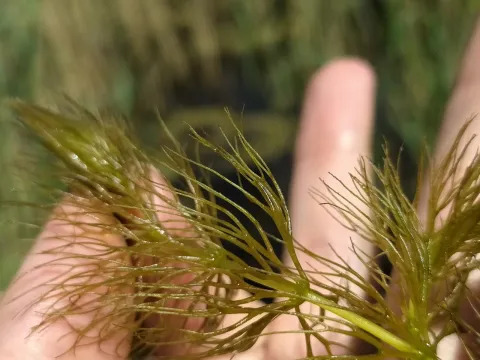
Soft hornwort (lat. Ceratophyllum submersum) is a perennial submerged aquatic plant belonging to the Ceratophyllaceae family. This species is unique among crops due to its lack of true roots; it absorbs all necessary nutrients and minerals directly from the water column through its entire surface area, making it a highly efficient biological agent in aquatic environments.
The plant originates from the temperate and tropical regions of Eurasia and Africa. It is widely distributed across various freshwater habitats, including ponds, lakes, and slow-moving rivers. In agricultural and aquacultural practices, it thrives in environments rich in dissolved nutrients, particularly in areas where water stagnation allows for the accumulation of essential growth elements.
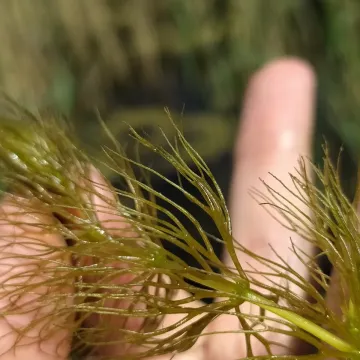
Botanically, Ceratophyllum submersum is characterized by whorls of finely divided, rigid leaves along a branched stem. It possesses an exceptional growth rate, which allows it to cover large surface areas rapidly. The optimal temperature for vigorous growth ranges from 18 to 26 degrees Celsius, and the plant displays high resilience to variations in light intensity and water alkalinity.
The cultivation of this crop requires strict management of water quality parameters. Unlike soil-based crops, hornwort depends on the constant supply of nitrogen, phosphorus, and carbon dioxide dissolved in the water. Intensive cultivation is typically carried out in controlled aquaculture systems or engineered ponds where water circulation is maintained to ensure the distribution of nutrients.
The economic applications of soft hornwort are multifaceted:
- Utilized as a natural biofilter in wastewater treatment plants.
- Harvested as a nutrient-rich organic supplement for animal feed.
- Provides essential habitat and food sources in intensive fish farming.
- Serves as a decorative and oxygenating component in water garden designs.
Regarding health and protection, the crop is susceptible to epiphytic algae infestation, which competes for sunlight and inhibits photosynthesis. Pests like aquatic snails and certain insect larvae can cause physical damage to the delicate stems. Proper management involves regular monitoring of chemical parameters and the introduction of biological controls to maintain a healthy and productive population.
Photo gallery