Cercestis mirabilis
Cercestis mirabilis
Description
Cercestis mirabilis is a fascinating tropical perennial vine belonging to the Araceae family. In its natural habitat, it acts as a hemi-epiphyte, climbing trees in dense, humid tropical forests. This unique plant is well-known among plant enthusiasts for its remarkable transformation of leaf shape and texture as it matures.
The native range of this species covers the tropical regions of West and Central Africa. It thrives in the understory of primary and secondary forests, where light is filtered and humidity levels remain consistently high throughout the year. These environmental conditions are essential for maintaining the health and vigor of the plant in domestic cultivation.
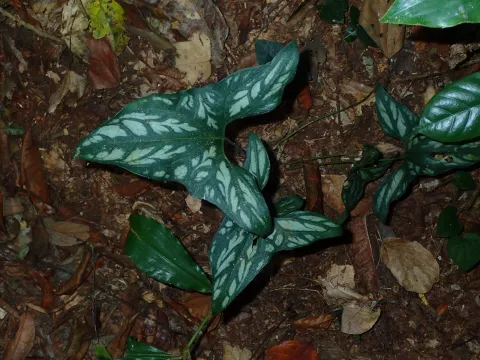
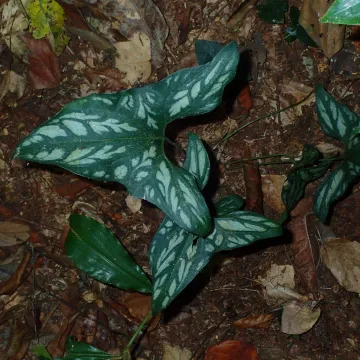
A distinctive botanical feature of Cercestis mirabilis is its heterophylly. Juvenile leaves are typically arrow-shaped or heart-shaped and adorned with striking silvery-grey marble patterns. As the plant climbs higher, the leaves enlarge significantly and develop a more mature structure, showcasing the plant's ability to adapt to different vertical heights within the canopy.
Cultivation of this species requires mimicking its natural jungle floor environment. The ideal substrate is loose, well-draining, and rich in organic matter, such as a mix of peat, bark, and perlite. The plant prefers temperatures between 20°C and 28°C and necessitates high ambient humidity, making it an excellent candidate for terrariums or humid greenhouse environments.
- Provide bright, indirect sunlight to prevent leaf scorch and maintain color patterns.
- Use a moss-covered pole to encourage climbing and healthy root development.
- Keep the growing medium moist but never waterlogged to prevent root rot.
- Mist leaves regularly or use an electric humidifier to boost local humidity.
- Fertilize lightly during the active growing season with a balanced fertilizer.
The primary use of Cercestis mirabilis is ornamental. It is highly sought after by collectors of rare Aroids due to its aesthetic appeal and the structural interest it provides. It is an excellent choice for indoor vertical gardening where its climbing nature can be fully displayed, provided that the necessary humidity and light levels are strictly maintained.
Pest management focuses on monitoring for common indoor invaders like spider mites and mealybugs, which thrive in low-humidity conditions. Diseases are almost exclusively linked to poor drainage or overwatering, which cause fungal rot. Maintaining good airflow around the foliage and ensuring a balanced hydration cycle are the best defenses against these health issues.
Photo gallery