Western redbud
Cercis occidentalis
Description
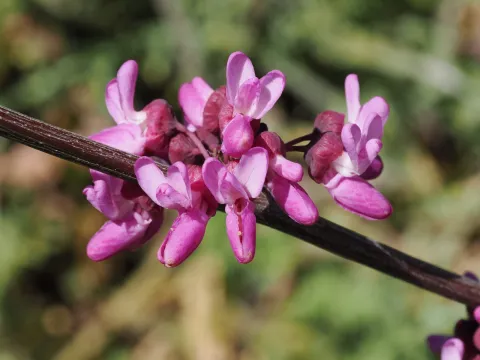
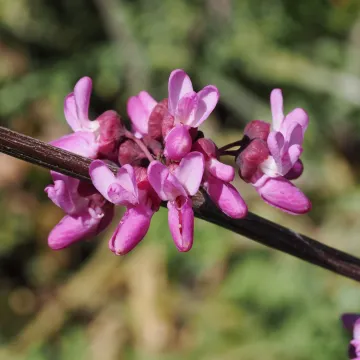
The Western redbud (Cercis occidentalis) is a deciduous shrub or small tree belonging to the Fabaceae family. It is highly valued for its striking, profuse magenta-pink floral display that appears in early spring before the foliage emerges. In its natural habitat, it often develops a multi-trunk habit, creating a dramatic architectural form that reaches heights of 3 to 6 meters.
Native to the western United States, specifically California and surrounding regions, the Western redbud is well-adapted to Mediterranean climates. It thrives in areas with dry summers and moderate winters. Its historical range extends through canyons, slopes, and woodland edges, where it demonstrates significant resilience and tolerance to environmental stressors, including periods of drought.
Botanically, the species is distinguished by its glossy, kidney-shaped leaves that turn vibrant shades of yellow and reddish-orange in the autumn. The flowers are pea-shaped and clustered along the branches. Following pollination, the plant develops long, flat seed pods that persist on the bare branches throughout the winter months, providing additional texture and interest to the garden.
Successful cultivation requires a location with full sun to partial shade and excellent soil drainage. While the species is drought-tolerant once established, young trees benefit from regular irrigation during their first few years to develop a robust root system. Pruning should be handled carefully, ideally immediately after flowering, to shape the tree and remove dead wood without disrupting the following year's bloom cycle.
The primary use of Cercis occidentalis is in ornamental landscaping, particularly in xeriscaping or native plant gardens. It serves as an excellent focal point or a backdrop for other drought-tolerant species. Despite its toughness, it can face several agricultural challenges:
- Verticillium wilt, which affects water transport within the tree.
- Scale insects that can weaken plant vitality.
- Leaf hoppers that cause stippling on the foliage.
- Botryosphaeria canker, often exacerbated by environmental stress.
Photo gallery