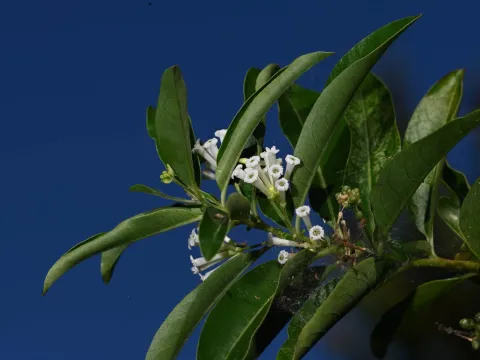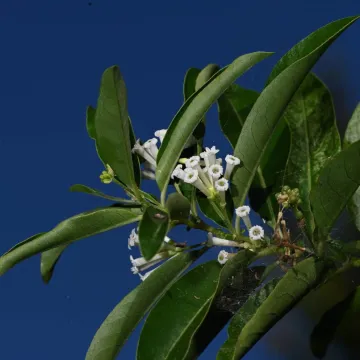
Day-blooming jessamine
Cestrum diurnum
Description
Day-blooming jessamine (Cestrum diurnum) is a prominent evergreen shrub belonging to the Solanaceae family. Unlike its night-blooming relatives, this species produces a distinct, sweet-scented fragrance during daylight hours, characterized by its clusters of white, tubular blossoms that attract pollinators such as butterflies.
Originating from the West Indies and parts of Central America, this plant is well-adapted to tropical and subtropical climates. In these regions, it often grows as an invasive species due to its high adaptability to varying environments. In cooler temperate regions, it is cultivated specifically as a greenhouse or container plant, needing protection from freezing temperatures.
From a botanical standpoint, the shrub typically grows to a height of 2 to 5 meters. Its foliage is lanceolate, smooth, and deep green in color, providing a lush backdrop for the inflorescences. After pollination, the plant produces dark, glossy berries. The growth habit is generally vigorous, requiring regular pruning to maintain a manageable size and shape in landscape settings.
Successful cultivation requires a sunny location and well-draining soil. It thrives in loamy, nutrient-rich substrates. Irrigation should be consistent, ensuring the root system remains moist without becoming waterlogged. The plant is relatively tolerant of different soil pH levels, though it performs best in neutral to slightly acidic conditions with organic matter enrichment.
- Light: Full sun to partial shade.
- Watering: Moderate to high; keep the soil consistently moist.
- Temperature: Prefers warm climates; sensitive to frost.
- Pruning: Prune heavily after flowering to promote bushiness.
The primary use of the day-blooming jessamine is ornamental, valued for its strong perfume and rapid growth in tropical garden design. While it is an excellent choice for hedge formation or specimen planting, horticulturists must note its toxicity. All parts of the plant, especially the berries, contain alkaloids that can be harmful if ingested, requiring careful placement in family gardens.
Photo gallery