Hairy snapdragon
Chaenorhinum villosum
Description
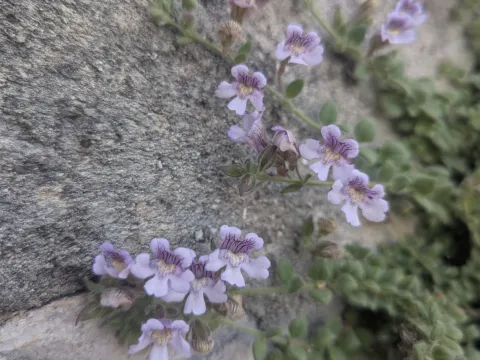
Hairy snapdragon (Chaenorhinum villosum) is a perennial herbaceous plant belonging to the Plantaginaceae family. In horticulture, it is highly valued for its compact growth habit and ability to spread quickly, forming dense, flowering mats. The plant features characteristic pubescence on its stems and leaves, which inspired its specific epithet, indicating its hairy texture.
The native range of this species is centered in the rocky regions of Southwestern Europe, particularly the Iberian Peninsula. In its natural habitat, the plant thrives on rocky scree and limestone slopes. In cultivation, it is successfully grown as an ornamental in open fields or garden beds, especially in regions with temperate climates where winter drainage is sufficient to prevent root rot.
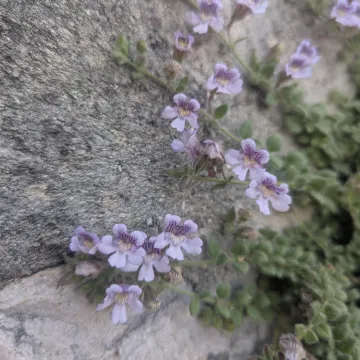
Botanically, the plant is a trailing subshrub with small, alternate leaves and zygomorphic, spurred flowers that resemble those of common snapdragons or linaria. The corolla colors range from soft lilac to deep purple, typically featuring a bright yellow throat. Flowering usually begins in late spring and, with proper maintenance, can persist well into the early autumn months.
Agricultural and gardening requirements focus on providing excellent drainage and placing the plant in full sun. The soil should be lean, sandy, or stony with a neutral to slightly alkaline pH. The plant is extremely sensitive to waterlogged conditions, which can lead to fungal stem rot; therefore, irrigation should be strictly moderate, provided only during prolonged dry spells.
Its primary use is in decorative landscaping, specifically for rock gardens, crevice plantings, and walls where its cascading habit can be showcased. As for pests and diseases, the main issues are root rot caused by poor soil structure and common sap-sucking pests like aphids or spider mites. Regular monitoring and maintaining proper airflow are essential for preventing these problems.
Photo gallery