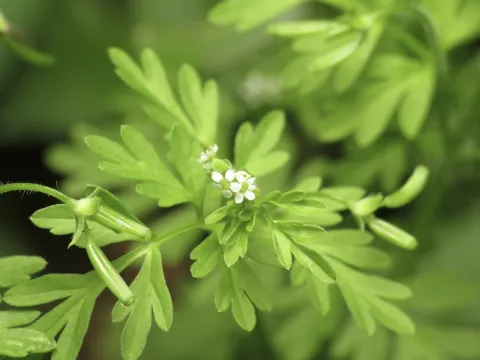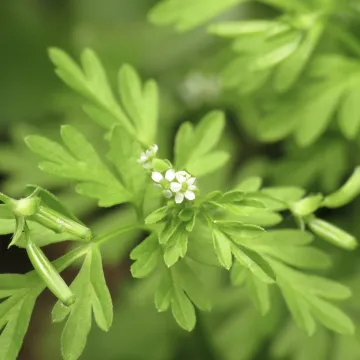
Spreading chervil
Chaerophyllum procumbens
Description
Spreading chervil (Chaerophyllum procumbens) is an annual herbaceous plant classified within the Apiaceae family. While less commercially prominent than its relatives, it remains a plant of scientific and horticultural interest due to its specific ecological niche and culinary potential as a niche aromatic herb.
Originating in North America, this species is naturally found in riparian corridors, moist woodlands, and shaded meadows. It thrives in temperate climates where spring moisture provides the necessary environment for its germination and rapid growth. The plant is well-adapted to habitats with consistent soil moisture and moderate temperatures.
Botanically, the plant is characterized by delicate, compound leaves and stems that tend to sprawl along the ground, which gives rise to its common name. The flowers are arranged in small umbels, typical of the parsley family. It is a moisture-loving plant that completes its life cycle relatively quickly, often maturing before the heat of mid-summer sets in.
For successful cultivation, growers should prioritize sites with rich, well-draining, and moisture-retentive soil. It is best to avoid areas exposed to intense direct sunlight, as the plant prefers partial shade. Regular mulching is recommended to maintain a cool root zone and prevent the soil surface from crusting, which can impede seedling emergence.
In terms of usage, the young foliage is occasionally used for its mild aromatic qualities. Pests and diseases primarily include those commonly found in Apiaceae, such as aphids during dry spells or mildew in stagnant air conditions. Proper spacing and airflow are the most effective cultural practices to ensure a healthy crop and minimize the need for chemical intervention.
Photo gallery