Chamaecrista capensis
Chamaecrista capensis
Description
Chamaecrista capensis is a perennial herbaceous plant belonging to the Fabaceae family, specifically the Caesalpinioideae subfamily. As an agricultural crop, it is gaining recognition for its potential in sustainable farming systems, primarily due to its nitrogen-fixing capabilities and its ability to thrive in diverse environmental conditions.
Native to Southern Africa, this species has successfully adapted to a wide range of habitats, from coastal areas to inland plateaus. Its natural distribution demonstrates a high level of resilience to environmental stress, making it a subject of interest for agricultural research aimed at developing climate-smart forage alternatives for arid and semi-arid regions.
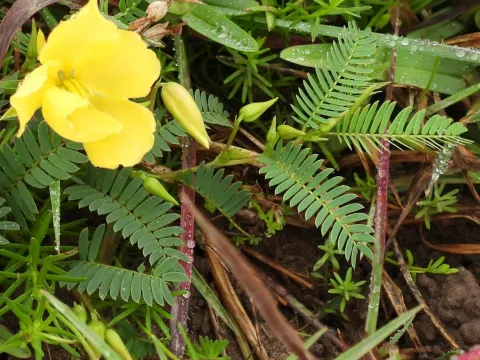
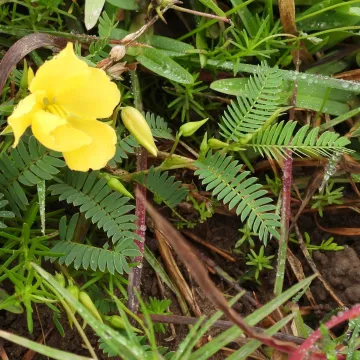
Botanically, Chamaecrista capensis is characterized by pinnate leaves with characteristic glands and distinct yellow flowers. The plant exhibits a robust root structure that facilitates deep soil penetration, improving soil aeration and stability. The fruits are typically compressed pods, which facilitate efficient seed dispersal and reproduction in natural and managed landscapes.
Regarding cultivation, the crop requires well-drained soil and prefers full exposure to sunlight. It is relatively drought-tolerant once established, but optimal yields are obtained under conditions of moderate rainfall. Agricultural management involves selecting appropriate planting densities and ensuring that the soil pH is within the neutral range to optimize nutrient uptake and bacterial symbiosis.
The primary agricultural use of Chamaecrista capensis is as a valuable forage component that enhances the protein content of livestock diets. Furthermore, it serves as an excellent cover crop to combat soil erosion and replenish nitrogen levels in depleted agricultural lands. Farmers should be vigilant regarding common pests like aphids and fungal diseases, which are best managed through proactive crop rotation and proper irrigation scheduling.
Photo gallery