Partridge pea
Chamaecrista fasciculata
Description
Partridge pea (Chamaecrista fasciculata) is an annual legume species belonging to the Fabaceae family. Known for its bright yellow flowers and nitrogen-fixing properties, it serves as a valuable plant for ecological restoration, sustainable agriculture, and honey production in various climates across the globe.
Native to North America, the plant is found throughout the central and eastern United States. It naturally thrives in diverse environments, including prairies, sandy plains, and disturbed sites like roadsides. Due to its hardiness, it has been widely adopted as a specialized crop for land reclamation and as a pollinator-friendly plant.
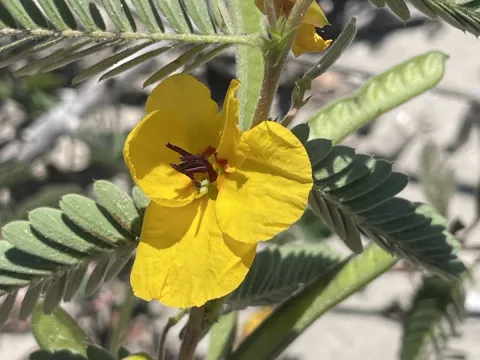
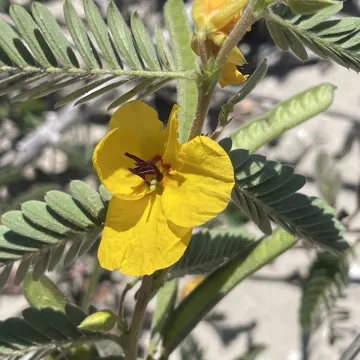
The plant features pinnately compound leaves that are sensitive to touch, folding up when disturbed. It typically grows to a height of 30 to 60 centimeters, forming branched stems. The flowers are distinctive, possessing five petals, and are visited by a wide range of bees and butterflies throughout the blooming season, which extends from mid-summer through autumn.
Cultivation requirements for Partridge pea are modest. It prefers well-drained, sandy or loamy soils and requires full sun exposure to flourish. As a legume, it does not require nitrogen-heavy fertilizers, as it naturally produces its own nutrients through a symbiotic relationship with bacteria. Seedbed preparation should ensure good soil-to-seed contact for optimal germination.
Economic and environmental applications include:
- Improving soil structure and nitrogen content for subsequent crops.
- Erosion control on dry or sandy slopes and embankments.
- Providing a high-quality forage source for native pollinators and honeybees.
- Serving as a food source for upland game birds and other wildlife species.
While Partridge pea is generally resistant to pests and diseases, excessive moisture can occasionally lead to fungal issues such as powdery mildew. Proper field management, including appropriate plant spacing to ensure airflow, is usually sufficient to prevent these problems. It is considered a low-maintenance crop that rarely requires synthetic inputs, making it ideal for low-impact farming systems.
Photo gallery