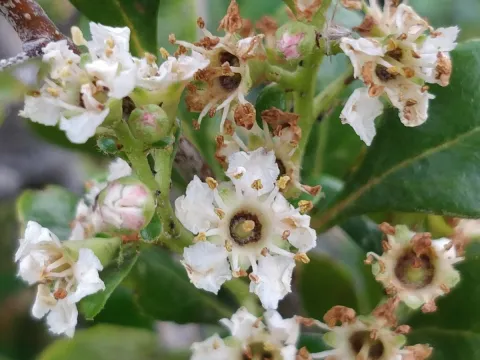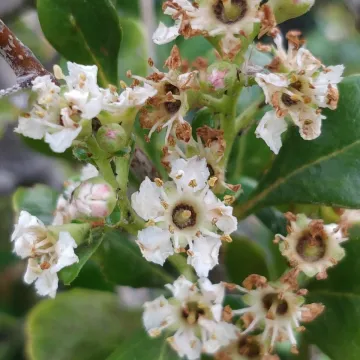
Chamaemeles coriacea
Chamaemeles coriacea
Description
Chamaemeles coriacea is a distinctive shrub species belonging to the Rosaceae family. It is a rare botanical gem, primarily recognized for its endurance in specific island environments and its unique physiological adaptations that allow it to thrive in nutrient-poor, rocky substrates.
The native distribution of this species is limited exclusively to the island of Madeira, Portugal. It is classified as an endemic plant, making its preservation a priority for local biodiversity conservation efforts. Its natural habitat typically includes mountainous or cliffside areas where it has evolved to withstand high exposure to wind and fluctuating moisture levels.
Botanically, the plant is characterized by its thick, coriaceous (leathery) leaves, which provide a significant advantage in water retention. These leaves are typically dark green and persistent throughout the year. The growth habit is generally low and dense, with a root system adapted to anchoring firmly into rocky crevices or thin layers of soil.
Cultivation requirements for this species demand a climate that mimics its native environment—typically mild, Mediterranean-like conditions without extreme frost. A well-draining soil medium is crucial, as the roots are highly susceptible to rot if water is allowed to stagnate. It requires consistent sunlight and should be protected from excessive artificial fertilization which might compromise its natural physiological balance.
From a utilitarian perspective, Chamaemeles coriacea is primarily of interest to botanical research and conservation science. It serves as a study model for plant resilience and drought tolerance within the Rosaceae family. While not a conventional agricultural crop, it has potential in niche ornamental horticulture where unique, slow-growing, and hardy shrubs are sought for xeriscaping.
- Family: Rosaceae
- Growth Type: Evergreen shrub
- Endemic Range: Madeira, Portugal
- Soil Preference: Rocky, well-draining
- Conservation Status: Rare/Endemic
Photo gallery