Chaptalia nutans
Chaptalia nutans (L.) Pol.
Description
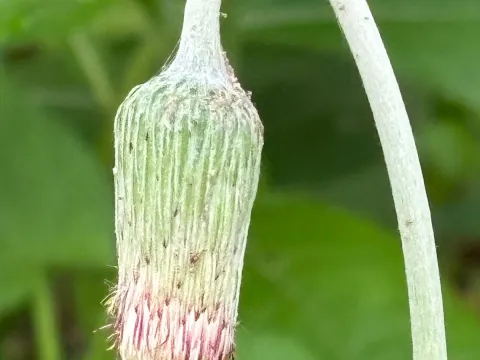
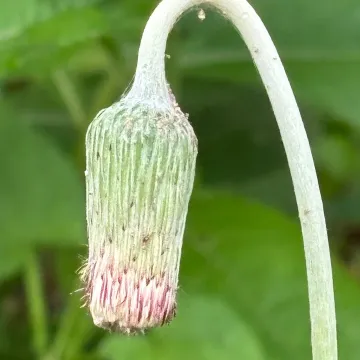
Chaptalia nutans is a perennial herb belonging to the Asteraceae family. In agricultural and botanical contexts, this species is recognized for its unique habit of producing basal leaf rosettes and flower heads that often nod or droop as they mature, which is the defining characteristic captured by its specific epithet.
The plant is native to a broad range of environments across the Americas, spanning from Mexico through Central and South America. It typically thrives in diverse habitats, including subtropical forests, grassy clearings, and mountain slopes. Its natural distribution demonstrates a significant level of adaptability to varying altitudes and soil conditions within the Neotropical zone.
Botanically, Chaptalia nutans features a fibrous to taproot system and a cluster of leaves that are often tomentose (hairy) on the underside. The flowering stalks rise directly from the base and bear solitary capitula. The seeds are equipped with a pappus, a specialized structure that allows for efficient anemochory, enabling the plant to colonize disturbed soils effectively.
Cultivation requirements for this species include well-draining, nutrient-rich soils and partial shade to protect the foliage from excessive transpiration. In agricultural settings, irrigation management is critical, as the plant does not tolerate waterlogging but requires consistent moisture to thrive. Integrated pest management should focus on preventing common fungal issues and monitoring for insects that may target the basal leaves.
Economically, Chaptalia nutans is primarily valued for its phytotherapeutic properties. Various parts of the plant are utilized in traditional medicine for their anti-inflammatory, digestive, and antiseptic properties. While not a large-scale commodity crop, it remains a subject of research for its potential as a specialty botanical product in sustainable herbal agriculture.
- Taxonomic family: Asteraceae.
- Native range: Central and South America.
- Preferred conditions: Partial shade and well-draining soil.
- Dispersal mechanism: Wind-dispersed seeds (anemochory).
- Primary use: Traditional medicinal applications.
Photo gallery