Chassalia gaertneroides
Chassalia gaertneroides
Description
Chassalia gaertneroides is an evergreen shrub species that belongs to the botanically rich Rubiaceae family. As a representative of tropical ecosystems, it demonstrates specific evolutionary adaptations that allow it to thrive in shaded environments characterized by high humidity levels and stable, moderate-to-warm thermal regimes throughout the year.
The native range of this species is primarily located within the tropical regions of Southeast Asia. It predominantly inhabits the understory of dense forests, where it benefits from nutrient-rich leaf litter and natural protection from intense sunlight. These ecological conditions define the plant’s requirements for its successful growth and long-term development in cultivation.
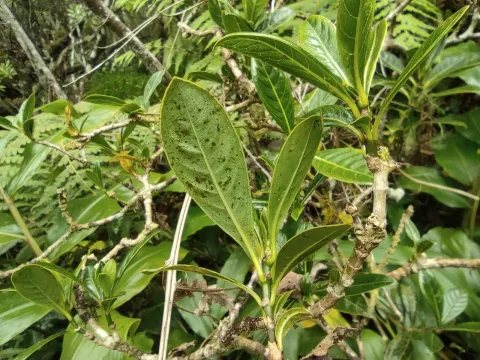
Morphologically, the plant features distinct opposite leaves with a glossy texture and specialized inflorescences typical of its family. The root system is shallow and dense, enabling the plant to compete effectively for surface nutrients in the forest floor. These structural characteristics make it a resilient species within its original biome.
Agricultural requirements for Chassalia gaertneroides include maintaining a consistently humid environment with temperatures ideally between 22 and 28 degrees Celsius. The soil should be well-drained, acidic, and rich in organic matter. Overwatering must be avoided to prevent fungal infections, while light should be filtered to simulate the conditions of the natural forest canopy.
Currently, the use of this crop is primarily decorative, though its potential for pharmacological research remains a subject of interest due to its chemical composition. Common pests include scale insects and spider mites, which require integrated pest management strategies. Maintaining optimal hygiene and ventilation in a greenhouse setting is essential for preventing the spread of common tropical plant diseases.
Photo gallery