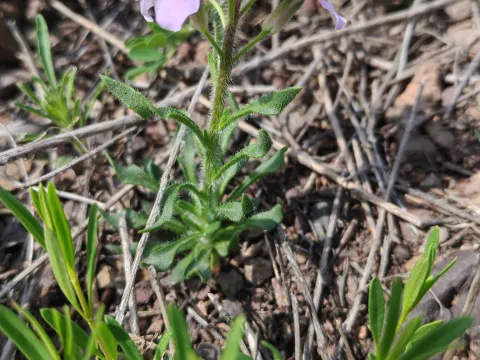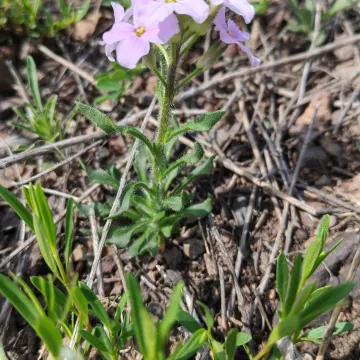
Clausia aprica
Clausia aprica (Stephan ex Willd.) Korn.-Trotzky
Description
Clausia aprica is a perennial herbaceous plant belonging to the Brassicaceae (mustard) family. Known for its remarkable resilience, this species has gained attention in agricultural research as a potential crop for arid and semi-arid environments where traditional farming faces challenges due to water scarcity.
The plant originates from the steppe regions of Siberia and Central Asia. Its natural habitat includes rocky slopes and dry grasslands, reflecting its adaptation to continental climates characterized by hot, dry summers and freezing winters. It thrives in open, sun-exposed terrains where vegetation competition is low.
Botanically, Clausia aprica is distinguished by a deep taproot system, which allows it to thrive in poor, stony soils. The plant features a basal rosette of leaves and upright, branching stems that bear small but distinctive flowers typical of the family. The fruits are elongated pods, common among Brassicaceae members.
Cultivation requirements focus heavily on soil drainage. The crop requires well-aerated, sandy, or rocky soil; heavy clay soils that retain moisture are generally unsuitable as they increase the risk of root rot. Minimal irrigation is required once the plant is established, making it a low-input candidate for soil stabilization projects.
Agricultural uses include its application as a forage plant in arid grazing lands and its role in erosion control. Pests and diseases typically mirror those of other Brassicaceae, including flea beetles and various fungal pathogens. Effective management relies on maintaining dry conditions and ensuring adequate plant spacing to facilitate airflow and disease prevention.
Photo gallery