
Cheiropleuria bicuspis
Cheiropleuria bicuspis
Description
Cheiropleuria bicuspis is a distinct species of fern within the Polypodiaceae family, although taxonomists often place it in the separate Cheiropleuriaceae family. This fern is known for its primitive, relic nature, serving as a living link to the ancient vegetation of the East Asian region. It represents a niche but highly valuable object for botanical studies.
The native range of this species spans across Japan, China, Taiwan, and parts of Southeast Asia. It thrives in humid, shaded forest environments, often colonizing slopes or areas near streams where the microclimate provides constant moisture and protection from harsh weather conditions. Its distribution is currently localized due to specific environmental preferences.
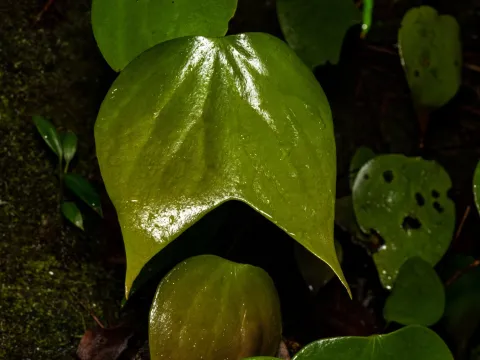
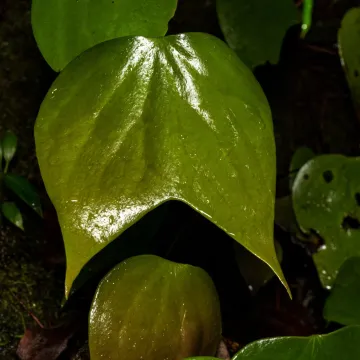
The morphology of Cheiropleuria bicuspis is characterized by dimorphic fronds. The sterile fronds are broad and distinctly divided into two lobes (hence the name 'bicuspis'), while the fertile fronds are narrower and densely covered in sporangia. This division of labor between leaves is a classic adaptation for efficient spore dispersal while maintaining photosynthetic surface area.
Cultivation of this fern requires precise environmental controls. It demands a substrate rich in organic matter, such as bark, perlite, and peat, which ensures both moisture retention and aeration. High humidity (above 70%) is critical, and the plant should be shielded from intense direct sunlight, which can cause leaf scorch and dehydration. Consistent, soft water irrigation is recommended.
In terms of economic and practical use, Cheiropleuria bicuspis is primarily grown as a specialty ornamental in private collections or by botanical institutions. It is not a broad-acre agricultural crop. The most common challenges in its management include mitigating fungal pathogens during winter stagnation and controlling for common greenhouse pests such as scale insects or mealybugs.
Photo gallery