Coastal goosefoot
Chenopodium ambiguum
Description
Coastal goosefoot (Chenopodium ambiguum) is an interesting agricultural crop belonging to the Amaranthaceae family. While not as widespread as its relatives, this species holds significant potential in modern agriculture due to its remarkable resilience to environmental stressors, particularly salinity.
The plant originates from the coastal regions of the Southern Hemisphere, primarily Australia and New Zealand. Its evolutionary development in coastal habitats has equipped it with unique physiological adaptations, allowing it to thrive in nutrient-poor and saline soils where many other crops struggle to establish.
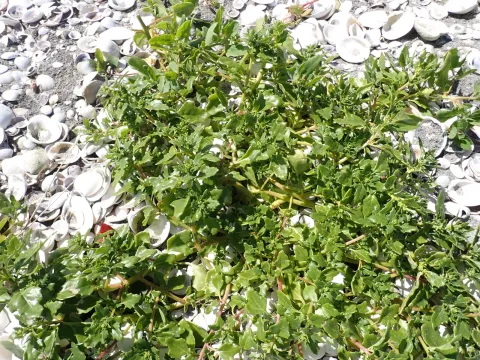
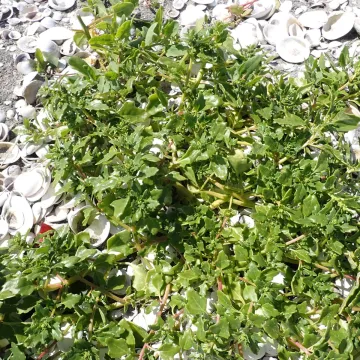
Botanically, Chenopodium ambiguum is characterized by its succulent, often prostrate stems and fleshy leaves, which assist in water retention. The plant produces small, inconspicuous flowers arranged in dense clusters, which eventually develop into small, high-energy seeds that are typical of the Chenopodium genus.
From an agronomic perspective, the crop requires well-drained soil and high levels of sunlight to achieve maximum biomass yield. It is highly adaptable to different soil types, provided that waterlogging is avoided. Standard agricultural practices involve row planting and maintaining weed-free conditions during the early growth phase to ensure the crop establishes successfully.
- High salinity tolerance.
- Versatility for forage or vegetable usage.
- Low requirement for heavy fertilizers.
- Fast growth cycle in warm conditions.
Regarding pests and diseases, the plant is relatively robust, though it remains susceptible to common goosefoot enemies such as aphids and leaf miners. To maintain healthy stands, growers should practice regular crop rotation and monitor field edges for signs of mildew during periods of high humidity.
Photo gallery