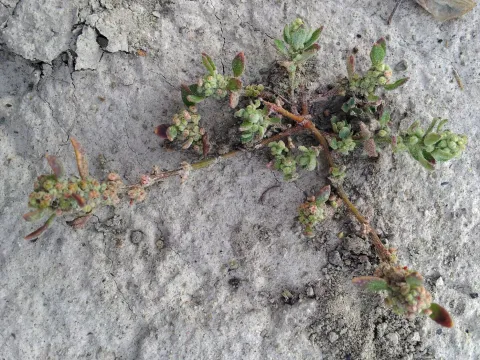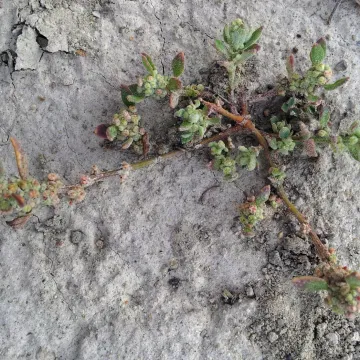
Chenopodium detestans
Chenopodium detestans
Description
Chenopodium detestans is an annual herbaceous plant belonging to the Amaranthaceae family. Known for its compact and often prostrate growth habit, it is a resilient species that has evolved specific morphological traits to survive in challenging, open environments where competition for resources can be intense.
The species is native to New Zealand, primarily found in coastal habitats and stony ground. Its distribution is closely tied to environments that offer specific soil mineral profiles, where the plant can thrive despite limited water availability and exposure to strong coastal winds.
Botanically, the plant is characterized by its small, alternate leaves which are typically covered in a mealy, granular substance that acts as a protective barrier. The flowers are small and clustered, often forming inconspicuous inflorescences that are wind-pollinated, typical for many members of the Chenopodium genus.
In terms of agricultural requirements, the species favors well-drained, sandy soils. It is highly adapted to neutral to alkaline pH levels. While it is naturally hardy, cultivation in a controlled environment requires strictly managed watering schedules to avoid root rot, which is the most common cause of failure in non-native settings.
The plant has limited commercial use, often managed as a weed in agricultural settings. However, it is a subject of ecological interest due to its adaptation to saline environments. Common pests include aphids and leaf-mining insects, while diseases are primarily restricted to fungal infections, such as powdery mildew, which can occur during periods of high humidity.
Photo gallery